Sued by Usher Law Group? What a Website Owner Needs to Know

Who is suing you, and the date that matters

By Michael Samuel, ADA defense attorney in New York

E-commerce manager reading papers in a bright office

If your company has been served with a federal lawsuit from Usher Law Group, P.C. saying your website can’t be used by a blind customer, you are one of at least 28 businesses the firm has sued over a website since April 2026. Usher Law Group is a Brooklyn law firm, and its website complaints are signed by Mikhail Usher or Alexander Susi. Every one of these cases is in Manhattan federal court (the Southern District of New York).

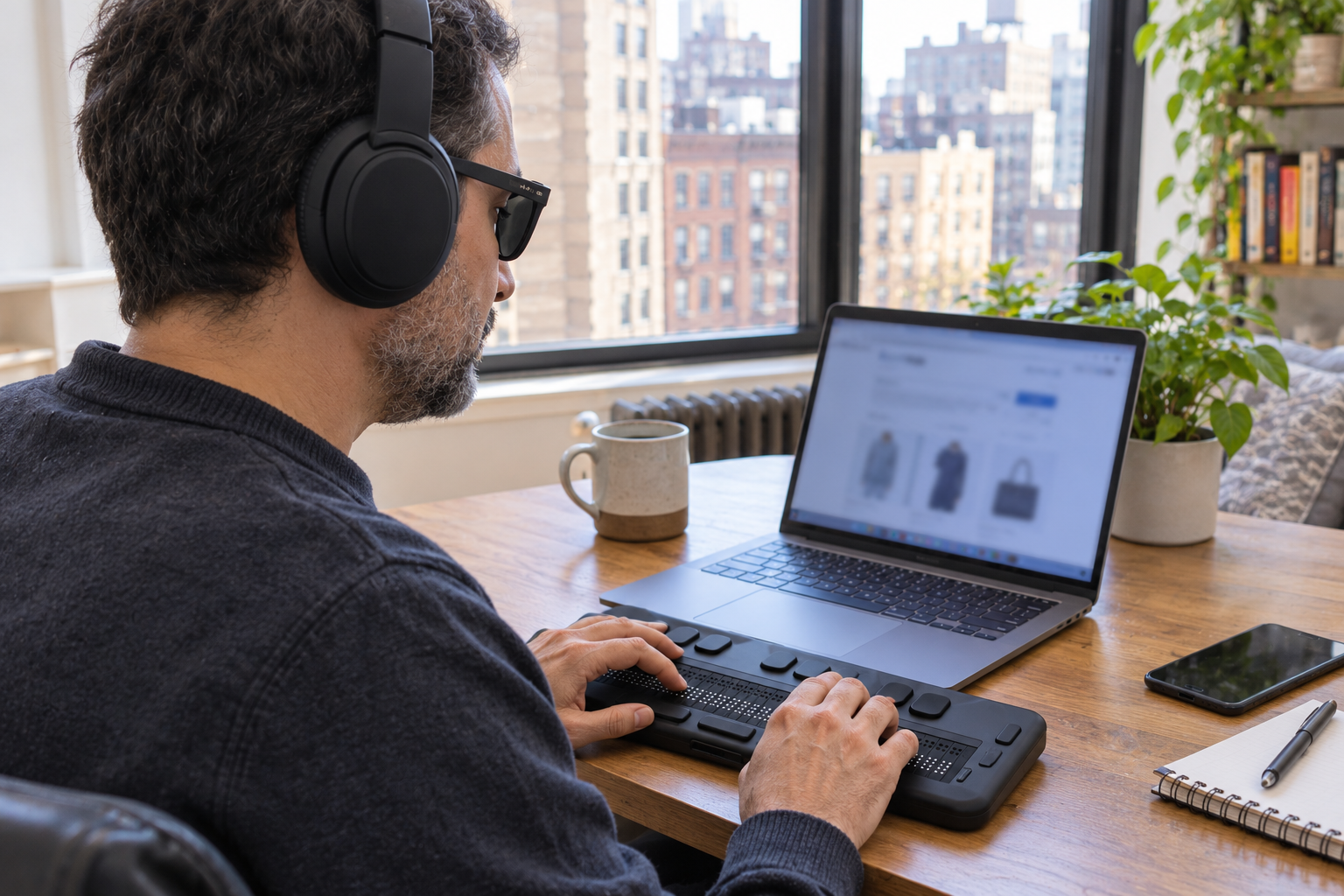
These are cases about your website, not a store. The complaint says a legally blind customer who uses screen reading software tried to buy a specific product from your site and couldn’t finish.

The date that matters. In federal court you generally have 21 days after you are served to answer or move to dismiss. If you signed and returned a request to waive formal service, you have 60 days from the date the request was sent. Write down the date you were served today, and keep every page, including the exhibits.

Who Usher Law Group sues, and who the plaintiffs are

Shoppers on a SoHo street lined with storefronts

Federal court records show at least 28 website accessibility suits filed by the firm in the Southern District of New York from April 15 to November 5, 2026. They come in batches: three in mid April, one in early July, nine between July 31 and August 4, and then five on a single day on September 30, on October 16 and on November 5.

The defendants are mostly well-known consumer brands that sell online: fashion and luxury labels, shoe and handbag makers, cosmetics, kitchenware, baby gear and a toy retailer. Many are based outside New York. The complaint we read in full was against a company headquartered in Missouri.

Two plaintiffs bring all of them. One was the plaintiff in the 13 cases filed from April through early August. A second, described as a legally blind Manhattan resident, is the plaintiff in the 15 cases filed since September 30. Most of the cases are listed, newest first, on our ADA lawsuit tracker. For why the same plaintiff sues many businesses, and why that alone doesn’t end a case, see is my ADA lawsuit a scam?

What the complaint says, and what it attaches

Blind man using a braille display to shop online

A specific product and specific dates. The complaint we read in full was filed on November 5, 2026. It says the plaintiff visited the site on November 1 and November 3 to buy a named product as a gift, explains why he wanted it, and says he will come back to buy it the moment the site is fixed. Those details are there because whether a plaintiff will really return is often the first fight in these cases.

Four barriers, each with an exhibit. Unlike the long generic lists in many website complaints, this one names four problems: product description text and specification text that a screen reader couldn’t read, a mini cart that disappeared before it could be reached, and a promo code button announced only as “button”. Each has its own exhibit labeled as proof of the barrier, and a fifth exhibit is offered as proof of the plaintiff’s blindness. The complaint says the barriers violate WCAG 2.1 Level AA, a set of technical guidelines that courts often look to, although no federal regulation requires private businesses to meet them.

Money, not just a fix. The complaint brings a claim under Title III of the federal ADA and adds claims under the New York State and New York City Human Rights Laws. It asks for damages for emotional distress and frustration, civil penalties, punitive damages under the city law, and the plaintiff’s attorney’s fees and costs. More on where the money claims come from: why an ADA lawsuit asks for money.

A request to shut the site down. The complaint also asks the court to order the company to stop operating the website until it complies. That is a request, not a ruling. Responding on time is how you get to argue over what, if anything, has to change and when.

It is not a class action. The complaint we read was brought for one plaintiff only. For a plain-English walk-through of your papers, see how to read an ADA lawsuit complaint.

How these cases have ended so far

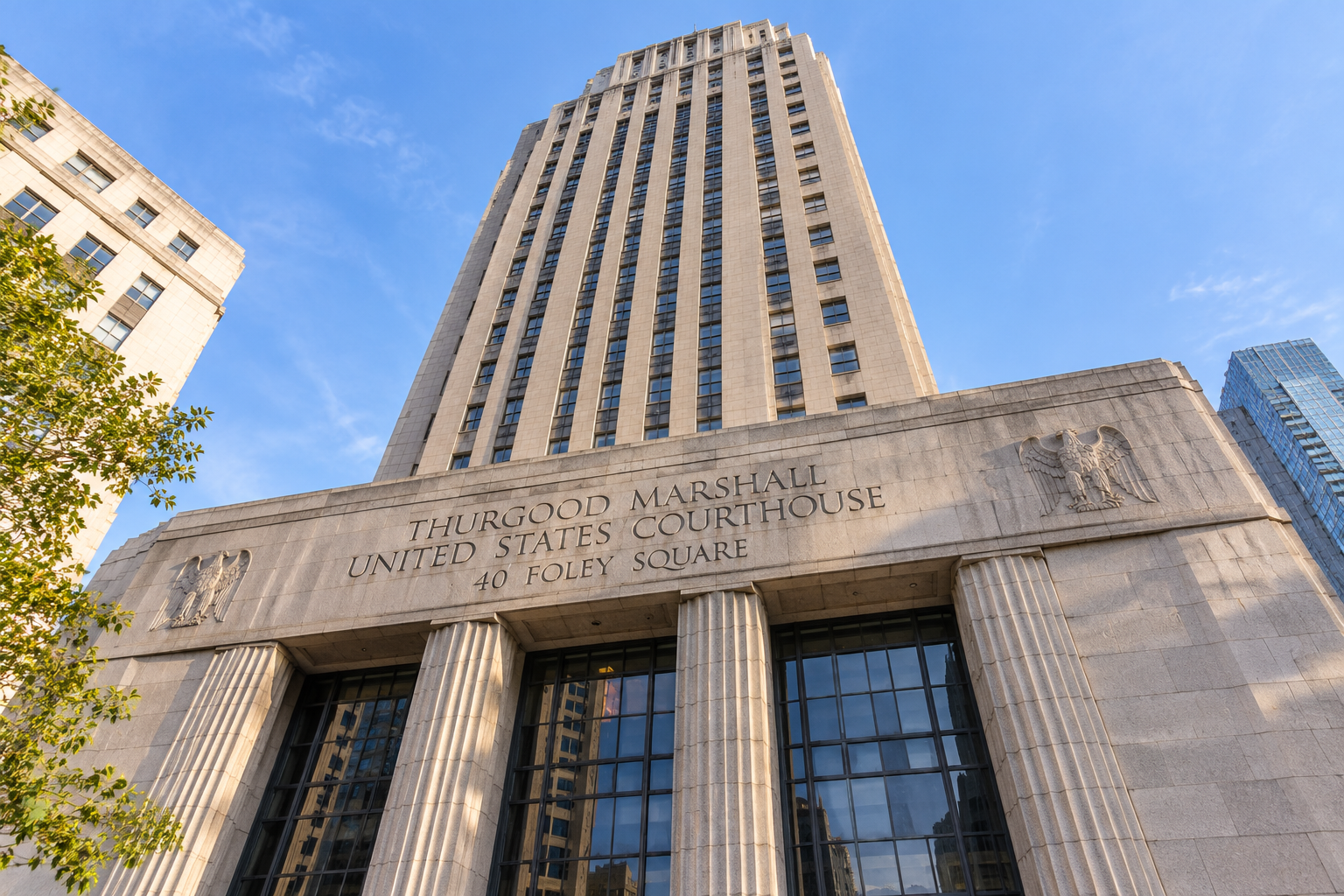
Federal courthouse tower in Lower Manhattan

The court records for the firm’s first 13 cases, filed from April through early August 2026, show how quickly most of them close. By mid November 2026:

  • At least six had ended. Four were closed by a notice or stipulation of voluntary dismissal, and two by court orders of dismissal, one of which says the case had been settled in principle. None of the six ended with a ruling on who was right.
  • In one, the company moved to dismiss in late October and the plaintiff opposed the motion in November. There is no decision yet. Earlier in that case, the judge told the plaintiff to make further attempts to serve the complaint, or to show that it had been properly served, before the 90 day deadline for service.
  • In another, the judge extended the company’s time to respond into December and said the first conference would be cancelled if a stipulation of dismissal was filed before then.

What the records don’t show is what any company paid. Settlement terms in these cases are almost never public. The pattern tells you two things: most of these cases end in months, not years, and the companies that respond have options that the ones who ignore the papers don’t. If you don’t respond at all, the plaintiff can ask for a default judgment, and you lose the chance to raise the defenses below.

This week: write down the date you were served, save a record of how the pages named in the complaint look and behave today before anyone changes them, have your developer test the four items in the exhibits, and tell your insurance carrier. Don’t call the plaintiff’s lawyer yourself.

What can work in your defense

Developer ticking a box on a four-item checklist

Standing. A plaintiff has to plausibly show a real plan to come back to your website. In 2022 the Second Circuit, the federal appeals court that covers New York, upheld the dismissal of five ADA cases because the plaintiffs’ statements that they would return were boilerplate (Calcano v. Swarovski North America). Usher complaints are written with that decision in mind: a named product, dates and a reason. That makes standing harder to win on the papers, but those same details can be tested, especially when the same plaintiff filed five lawsuits on the same day. More: what standing means in an ADA lawsuit.

Websites with no store behind them. The complaint we read says the case is about the website alone, not a physical store. New York federal judges disagree about whether the ADA covers a website with no physical location, and the Second Circuit hasn’t decided. In December 2025 a Manhattan federal judge held that the ADA does not cover standalone websites, dismissed the federal claim, and left the state and city claims to be refiled in state court (Fernandez v. Gainful Health). Other judges in the same courthouse have ruled the other way, so this is a real argument, not a sure one. More: does the ADA apply to an online-only business?

Whether New York is the right place. Many of the companies sued are based in other states. A New York court needs a legal basis to hear a case against an out-of-state company, and selling to New York customers through the website is usually what the plaintiff relies on. In a 2019 Manhattan decision, the court found it had no jurisdiction over a grocery chain with no New York stores or deliveries (Diaz v. The Kroger Co.). More: sued in New York as an out-of-state business.

Fixing the four items, and proving it. Because the complaint names specific barriers, your developer can check each one. Manhattan federal judges have dismissed website cases as moot where the business documented its fixes and committed to keeping the site accessible, and have refused where the fixes were incomplete or only promised. Fixing the site doesn’t automatically end the state and city money claims. More: fix your website before or after you respond?

What the money claims are really worth. The federal ADA claim can’t produce money damages for the plaintiff, only an order to fix the site plus attorney’s fees. The damages come from the state and city claims, and what they are realistically worth in your case is one of the first things to work out. Published industry estimates put most small-business website settlements between $5,000 and $20,000 before legal fees, and New York cases often run higher. More: what it costs to settle an ADA website case.

How The Samuel Law Firm can help

Michael Samuel

Michael Samuel has defended about 100 ADA cases since 2019, most of them about websites, in the federal courts in Manhattan and Brooklyn and in New York state court. Website cases are handled for a flat fee that covers all the work up to trial, including a motion to dismiss.

When an Usher Law Group complaint comes in, we check the service date, test the four barriers in the exhibits against your site as it is today, look at the plaintiff’s other lawsuits, and work out whether standing, the online-only question, jurisdiction or mootness is the strongest route for your company. Then we tell you what a defense looks like and what a realistic resolution looks like, before you decide anything.

Call (212) 563-9884 before your answer deadline, or upload the complaint to our free complaint checker for a plain-English summary first. Our written dismissals, with the courts and index numbers, are on the results page. Prior results do not guarantee a similar outcome. Other website firms we have written about: Gottlieb & Associates, Joseph & Norinsberg and Mizrahi Kroub.

Frequently asked questions

The firm’s website cases are in Manhattan federal court, so you generally have 21 days after you are served. If you signed and returned a waiver of service, you have 60 days from the date the waiver request was sent. Have a lawyer confirm the exact date right away.

Yes. Besides the federal ADA claim, the complaint brings New York State and New York City Human Rights Law claims and asks for damages for emotional distress, civil penalties and the plaintiff’s attorney’s fees. The federal ADA claim alone only allows an order to fix the site plus fees.

The complaint asks for an order stopping the website until it complies. That is the plaintiff’s request, not a court ruling. Answering on time lets you argue over what actually has to change, and by when.

The complaint says your website sells to customers in New York, including the plaintiff in Manhattan. Whether that is enough for a New York court to hear the case depends on your facts, and it can be a defense for a company with little connection to New York.

Fixing them is usually part of the answer, and courts have dismissed website cases as moot where the fixes were complete and documented. It doesn’t automatically end the state and city money claims. Save a record of how the site looked when you were served, and coordinate the timing with your lawyer.

Of the firm’s first 13 website cases in 2026, at least six were closed within about seven months by voluntary dismissal or a court order of dismissal, one of which noted a settlement in principle. The terms aren’t public. None of the six ended with a ruling on the merits.

Talk it through

Free consultation, flat fee quoted before you commit

I am Michael Samuel. I have practiced law in New York since 1993 and I have handled roughly a hundred ADA accessibility matters, most of them website cases, for the business on the receiving end. If a letter or a lawsuit about your website has arrived, the first call costs nothing and you will get a straight answer about where you stand. I handle website accessibility defense on a flat fee, quoted before you commit, so you know the number up front.

Recent decisions in these cases, with the courts and index numbers, are on my results page. Prior results do not guarantee a similar outcome. If your letter came from a firm we have written about, see what to know about Equal Access Law Group letters and what to know about Apex Trial Law letters.

For a free consultation, call 212-563-9884, email michael@thesamuellawfirm.com, or use the contact form.

Attorney Advertising. This article is general information about New York law and is not legal advice about your situation. Reading it does not create an attorney client relationship.


The Samuel Law Firm
1441 Broadway, Suite 6085
New York, NY 10018
212-563-9884

Contact Us

Sued, owed wages, or injured? Talk to a New York litigator today.

The Samuel Law Firm is a litigation firm in Manhattan. Michael Samuel defends businesses in ADA lawsuits, website and premises, in wage and hour cases, and in contract and commercial disputes, and represents employees owed wages and people injured by negligence. He has practiced in New York since 1993 and appears in the Southern and Eastern Districts of New York and the New York state courts. Call 212-563-9884 for a free consultation; he answers directly