Sued in New York but Your Business Is in Another State? What to Know

Why you were sued in New York, and why you can't ignore it

By Michael Samuel, ADA defense attorney in New York

Coffee roaster owner packing online orders for shipping

Your business is in California, Texas or North Carolina. You’ve never had an office in New York. And yet you’ve been served with a lawsuit filed in federal court in Manhattan or Brooklyn, claiming your website doesn’t work for blind users.

You’re not unusual. New York is one of the busiest places in the country for website accessibility lawsuits, and many of them name companies based in other states. The plaintiff’s lawyers are in New York, and the plaintiff says they tried to shop from New York.

My name is Michael Samuel. I’m an ADA defense attorney in New York, and I have defended about 100 ADA cases since 2019, most of them about websites. This article explains when a New York court can hear a case against your business, when it’s worth fighting that, and what you need to do from out of state.

The most important fact first. Being out of state doesn’t stop the clock. In federal court you generally have 21 days from service to respond. If you don’t, the plaintiff can get a default judgment, and a federal judgment from New York can be registered and enforced in the federal court where your business is.

Can a New York court hear a case against an out-of-state business?

Delivery box waiting on a brownstone stoop in Harlem

Often, yes. A federal court in New York uses New York’s own rules to decide whether it can hear a case against a business from another state. Under New York’s “long-arm” law, a court can reach a business that transacts any business in New York or contracts to supply goods or services there, as long as the lawsuit is connected to that business.

If you ship to New York, expect jurisdiction. In March 2025, in Fernandez v. Katie May, a Manhattan federal judge kept a website case against an online fashion retailer that had no office, employees or bank account in New York. It shipped online orders to New York customers, and the plaintiff tried to buy a dress from her New York home. The judge held that shipping even a small amount of product to New York counts, and relied on a 2024 decision of the Second Circuit, the federal appeals court that covers New York, that a completed sale isn’t required, only a transaction.

If you truly don’t do business in New York, there may be a defense. In 2019, in Diaz v. Kroger, a Manhattan federal judge dismissed a website case against an Ohio grocery chain in part because it didn’t deliver to any New York zip code, and simply being able to visit its website from New York wasn’t enough. Courts have also said that the mere possibility of a New York customer buying from your site, without evidence that anyone did, doesn’t establish jurisdiction on its own.

But the court may want proof. In 2024, in Zelvin v. H Heritage, a case against an Alabama leather goods company, the judge found the complaint’s jurisdiction claims too thin but, instead of dismissing, ordered the two sides to exchange evidence about whether the company had done business in New York. Your own order records usually decide this question.

Should you fight it on jurisdiction? Sometimes

Chess game in progress on a sunny table, seen from above

Raise it right away or lose it. Under the federal rules, the objection that a court has no power over your business has to be raised in your first response to the complaint. If you file an answer without it, the objection is waived.

Know your numbers first. Whether the objection has a chance usually comes down to one question: has your business sold or shipped anything to New York? Pull your order records before deciding. If New York orders are there, a jurisdiction motion mostly adds cost and delay.

Winning may move the case, not end it. A dismissal for lack of jurisdiction doesn’t decide whether your website is accessible. The plaintiff can often sue again where your business is located, and some states are tougher than New York. California’s Unruh Act, for example, provides minimum damages of $4,000 per violation.

Other defenses still apply. Standing, the condition of your website and, for businesses with no physical store, the online-only argument are all available whether or not you contest jurisdiction. The right strategy weighs all of them together.

You need a lawyer who can appear in that court

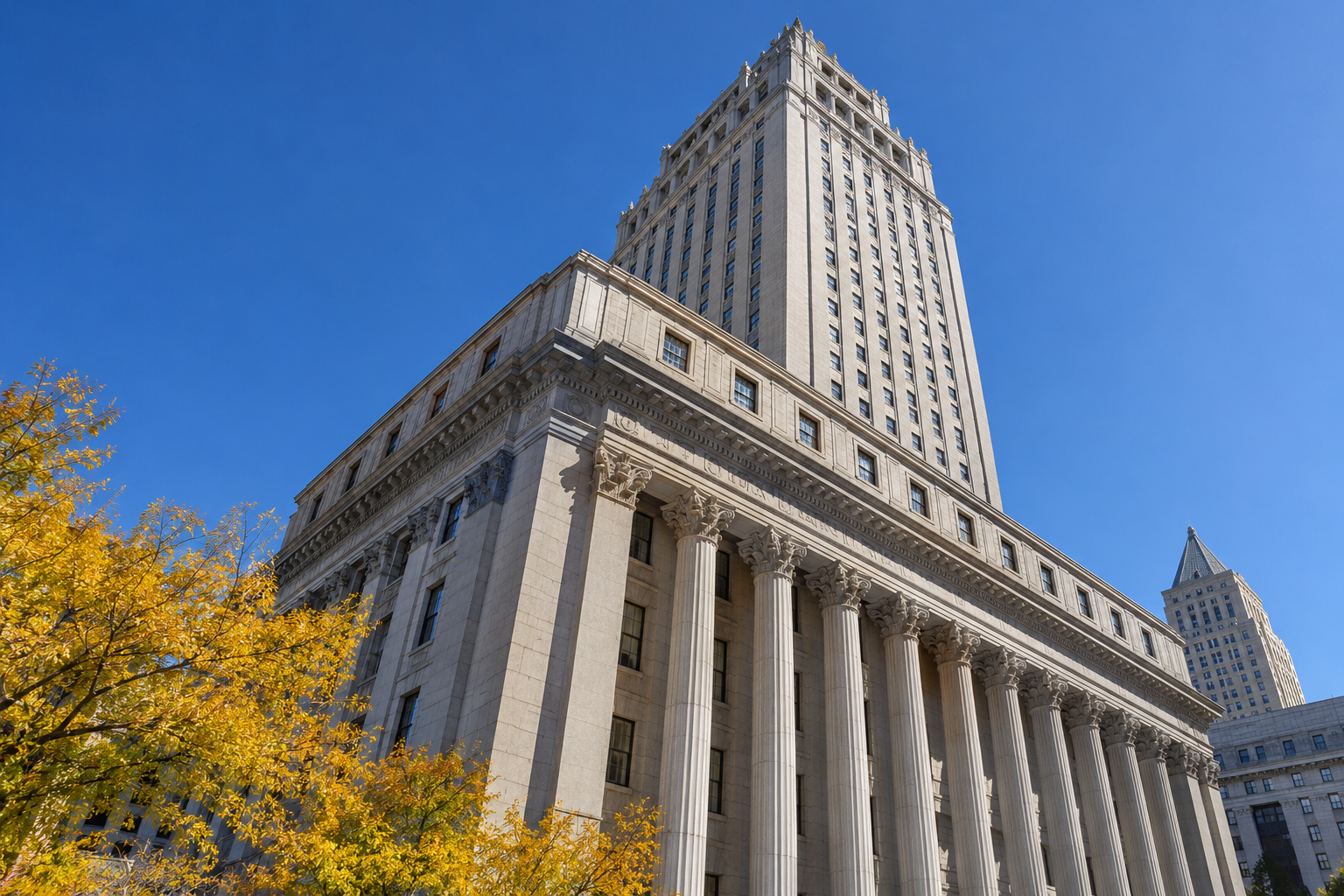
Federal courthouse at 40 Foley Square in Lower Manhattan

Your company can’t represent itself. A corporation can appear in federal court only through a licensed lawyer, and the Second Circuit has held the same for a limited liability company, even one with a single owner. An owner can’t simply write to the judge on the company’s behalf. In one 2026 copyright case in Manhattan, a company’s CEO came to two hearings in person, but the company had no lawyer, and the court entered a default judgment against it.

Your usual lawyer may not be admitted there. To practice in the federal courts in Manhattan and Brooklyn, a lawyer generally has to be admitted to that court, which requires New York bar membership with narrow exceptions. A lawyer from another state can ask the court’s permission to appear in one specific case, but that adds a step, and they’ll be working in a court whose judges and local practices they don’t know.

State court is no different. Some of these cases are filed in New York State Supreme Court instead, where you generally have 20 or 30 days to respond, depending on how you were served. See our post on KSS Law, which files in state court.

Your deadline and first steps from out of state

Operations manager filtering online orders by state on a laptop
  1. Count your deadline from service. Generally 21 days in federal court. If you agreed to waive formal service, it is 60 days from when the waiver request was sent.
  2. Pull your New York sales. How many orders shipped to New York addresses, and what share of revenue they are. This one number shapes the jurisdiction question and often the settlement value.
  3. Save your website as it is. Keep a dated copy of the pages named in the complaint before changing anything.
  4. Don’t call the plaintiff’s lawyers. Let a New York lawyer make the first contact.
  5. Hire New York counsel early. The jurisdiction objection has to go in your first response, so the decision has to be made before that deadline, not after.

To understand the papers, read how to read an ADA lawsuit complaint, or upload yours to our free complaint checker for a plain-English summary. If you’re wondering why the same plaintiff has sued so many other businesses, see why serial ADA lawsuits happen. For timing on fixing the site, see whether to fix your website before or after you respond.

How The Samuel Law Firm can help

Michael Samuel has defended about 100 ADA cases since 2019, most of them about websites, and represents businesses from other states that are sued in New York. He is admitted in New York and in the federal courts for the Southern and Eastern Districts of New York. For website cases, the firm charges a flat fee that covers all work up to trial, including a motion to dismiss.

For an out-of-state client, we look at your New York sales first, tell you whether a jurisdiction challenge is worth making, and set it against the other defenses before your first deadline.

For the website itself, we work with Codexyo, an independent web accessibility team that fixes sites like yours. They are not lawyers, and you’re free to use anyone.

Frequently asked questions

Often, yes. A New York court can hear a case against an out-of-state business that transacts business in New York, such as selling or shipping products to New York customers, when the lawsuit is connected to that business. If your business truly has no New York sales, there may be a defense.

Usually. In 2025 a Manhattan federal judge held that shipping even a small amount of product to New York was enough in a website accessibility case, and the Second Circuit has said a completed sale isn’t required, only a transaction. Your order records decide the question.

Only with extra steps. A lawyer generally has to be admitted to the New York federal court to appear there, and an out-of-state lawyer must ask the court’s permission to appear in one specific case. Your company also can’t represent itself: a corporation or LLC can appear in federal court only through a licensed lawyer.

The plaintiff can ask the court for a default judgment. A federal judgment from New York can then be registered and enforced in the federal court where your business is located, so ignoring it rarely makes it go away.

Sometimes. It must be raised in your first response or it is waived, and it works best when your business has no New York sales. Winning may only move the case to your home state, where some laws, such as California’s, allow higher damages.

Talk it through

Free consultation, flat fee quoted before you commit

I am Michael Samuel. I have practiced law in New York since 1993 and I have handled roughly a hundred ADA accessibility matters, most of them website cases, for the business on the receiving end. If a letter or a lawsuit about your website has arrived, the first call costs nothing and you will get a straight answer about where you stand. I handle website accessibility defense on a flat fee, quoted before you commit, so you know the number up front.

Recent decisions in these cases, with the courts and index numbers, are on my results page. Prior results do not guarantee a similar outcome. If your letter came from a firm we have written about, see what to know about Equal Access Law Group letters and what to know about Apex Trial Law letters.

For a free consultation, call 212-563-9884, email michael@thesamuellawfirm.com, or use the contact form.

Attorney Advertising. This article is general information about New York law and is not legal advice about your situation. Reading it does not create an attorney client relationship.


The Samuel Law Firm

1441 Broadway, Suite 6085

New York, NY 10018

212-563-9884

Contact Us

Sued, owed wages, or injured? Talk to a New York litigator today.

The Samuel Law Firm is a litigation firm in Manhattan. Michael Samuel defends businesses in ADA lawsuits, website and premises, in wage and hour cases, and in contract and commercial disputes, and represents employees owed wages and people injured by negligence. He has practiced in New York since 1993 and appears in the Southern and Eastern Districts of New York and the New York state courts. Call 212-563-9884 for a free consultation; he answers directly