Sued by Gabriel A. Levy, P.C.? What New York Businesses Should Know

Who is suing you, and the date that matters

By Michael Samuel, ADA defense attorney in New York

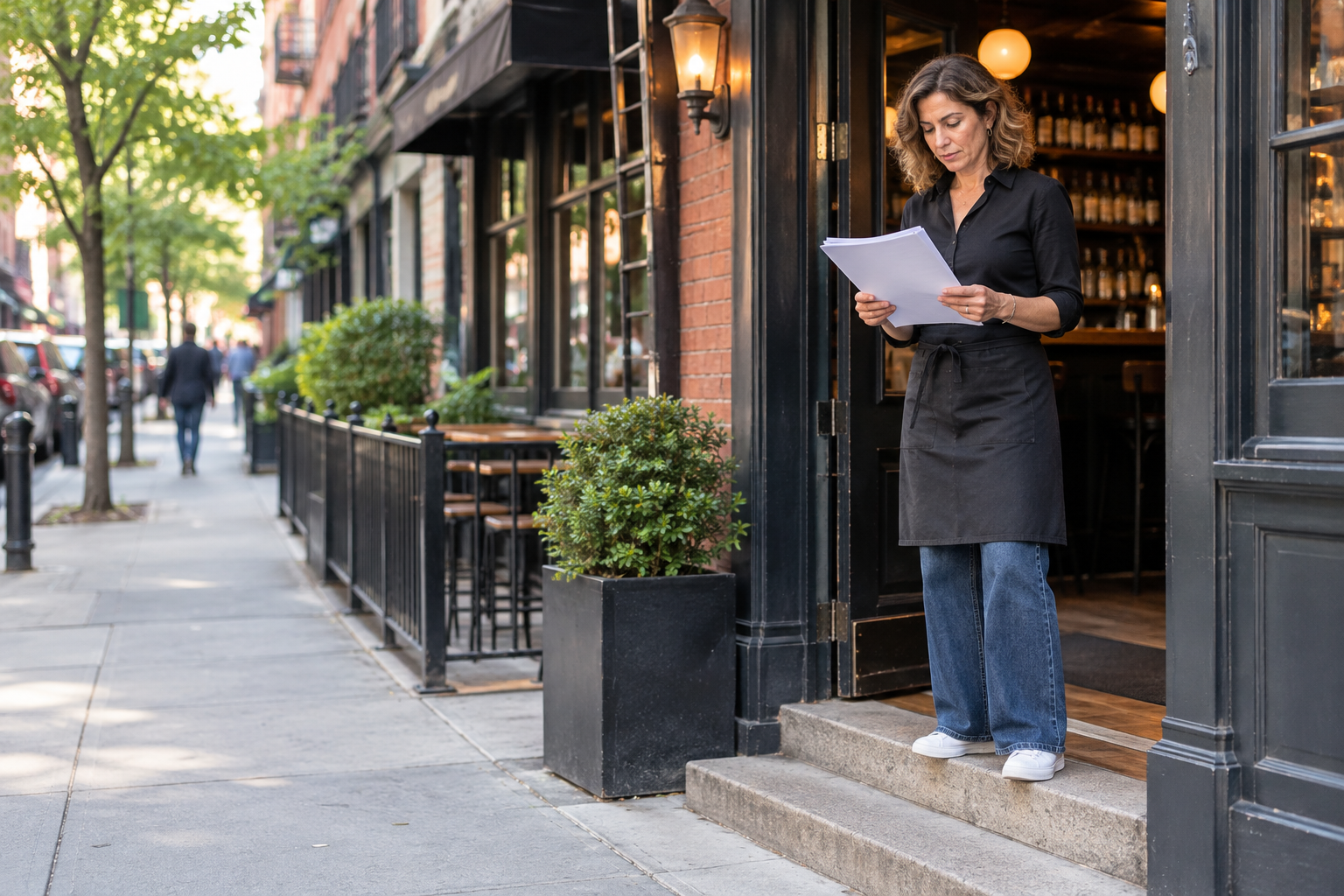
Bar owner reading papers at a stepped entrance

If your business has been served with a federal lawsuit signed by Gabriel A. Levy of Gabriel A. Levy, P.C., a law firm in Manhasset on Long Island, you are one of about 200 New York businesses the firm sued under the Americans with Disabilities Act from October 2024 to May 2026. Almost all of these cases, 189 of them, are in Manhattan federal court (the Southern District of New York). The other 11 are in Brooklyn federal court (the Eastern District of New York).

The firm files two very different kinds of ADA cases, and the first thing to do is work out which one you have:

  • A wheelchair access case about your building: the step at your door, your tables, your bar and your restroom. These usually name two defendants, the business and the company that owns the building.
  • A website case brought for a blind customer who uses a screen reader. These usually name only the business, and they are written as class actions.

The date that matters. In federal court you generally have 21 days after you are served to answer or move to dismiss. If you signed and returned a request to waive formal service, you have 60 days from the date the request was sent. Write down the date you were served today and keep every page.
How often the firm files, and who the plaintiffs are

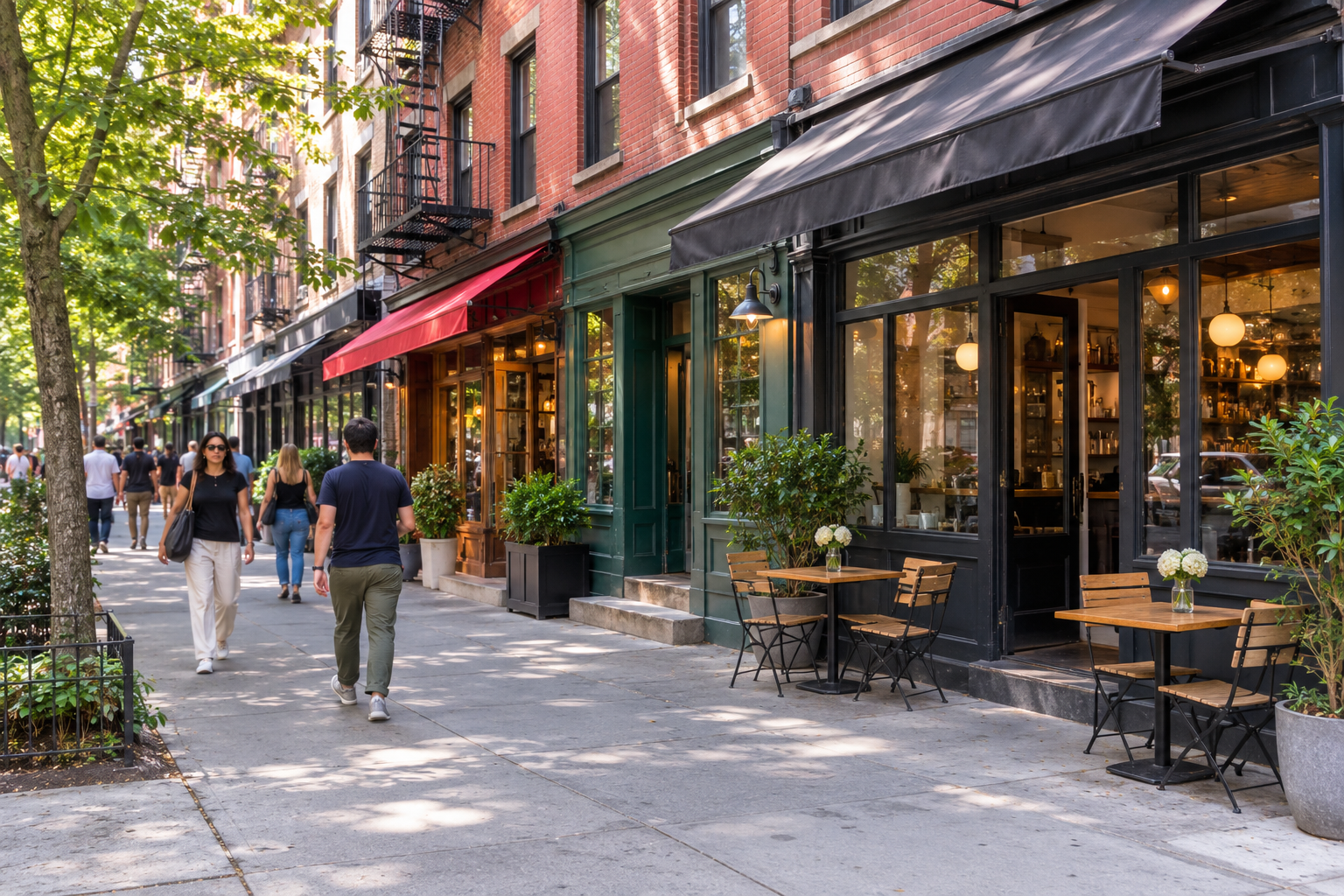
Row of Manhattan storefronts with steps at the entrances

The pace has changed a lot. Federal court records show 77 suits filed in just three months, from November 2024 through January 2025. Since then the firm has filed a few a month, and the most recent case in the federal records is from May 4, 2026. Current counts are on the tracker linked below. A slower pace doesn’t mean an open case will go away on its own.

A small group of plaintiffs brings most of the cases. In the 43 ADA cases the firm filed from September 2025 to May 2026:

  • 36 were wheelchair access cases against restaurants, bars, delis, coffee shops and other Manhattan storefronts, brought by three plaintiffs who use wheelchairs.
  • 7 were website cases, all brought by one blind plaintiff, against businesses including a restaurant, shops, a pharmacy and a museum.

The same business can get both. In March 2026 one Flatiron restaurant was sued over wheelchair access and, eleven days later, over its website, by different plaintiffs through the same firm.

Every case is listed, newest first, on our Gabriel A. Levy lawsuit tracker. For why the same plaintiff sues many businesses, and why that alone doesn’t end a case, see is my ADA lawsuit a scam?

What the complaints say

Hand measuring the space under a restaurant table

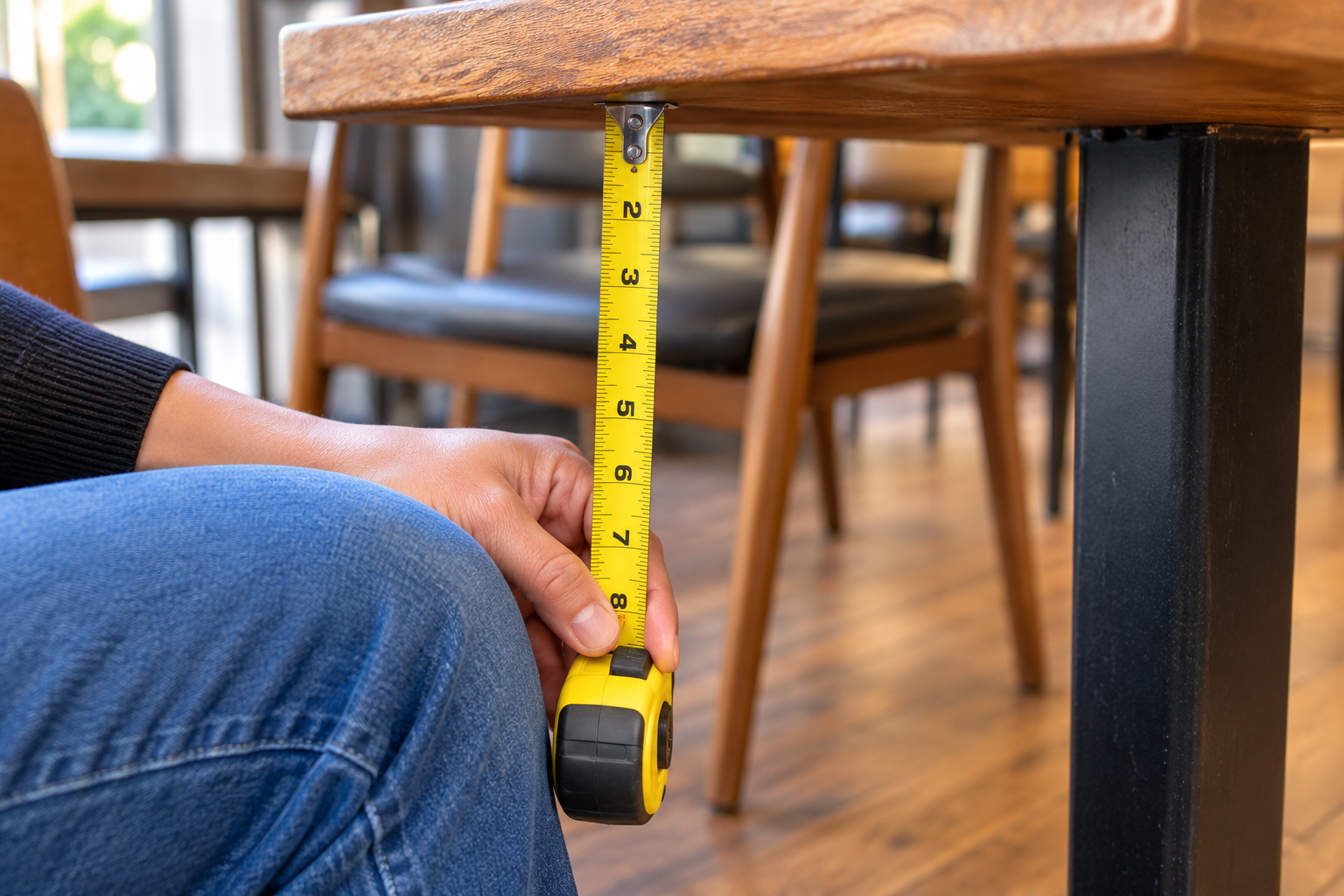
The wheelchair access complaint. The one we read in full, filed in September 2025, is ten pages long. The plaintiff, a Queens resident who uses a manual wheelchair, says he tried to visit a Manhattan bar on a specific date, was stopped by steps at the entrance and had no way to reach the staff inside. It then lists other barriers he says exist: tables without knee clearance, a bar that is too high, no accessible restroom signs and no grab bars. It says the list is not complete and that he will add more after an inspection.

Three details in it matter:

  • It says, “upon information and belief”, that the building was built for first occupancy after January 26, 1993. That date is important. Buildings built after it have to meet the full new construction standards. Older buildings, which describes much of Manhattan, generally only have to remove barriers where that is “readily achievable”, meaning easy to do without much difficulty or expense.
  • It names the building owner as well as the business, and says both are liable together.
  • It asks the court to order the business closed until every violation is fixed. That is a request, not a ruling.

The website complaint. The one we read in full, filed in March 2026 against a restaurant, says a legally blind Bronx resident using the NVDA screen reader visited the site on two dates to view the menu, order food and book a table. In his own account he describes three problems: pop-ups that couldn’t be closed by keyboard, menu labels his screen reader didn’t announce, and links at the bottom of the page that didn’t respond. A longer list in the complaint comes from an automated scan, not from his visit. The complaint asks for class status for blind users nationwide and in New York.

The money claims. Both complaints add claims under the New York State Human Rights Law, the New York City Human Rights Law and the New York Civil Rights Law, asking for damages and attorney’s fees, and the building complaint adds punitive damages under the city law. The Civil Rights Law claim seeks a penalty of $100 to $500 for each violation, and that law requires notice to the state Attorney General at or before the start of the case. The website complaint we read says notice “will” be served. Whether it was served on time is worth checking. For a plain-English walk-through of your papers, see how to read an ADA lawsuit complaint.

How these cases have ended

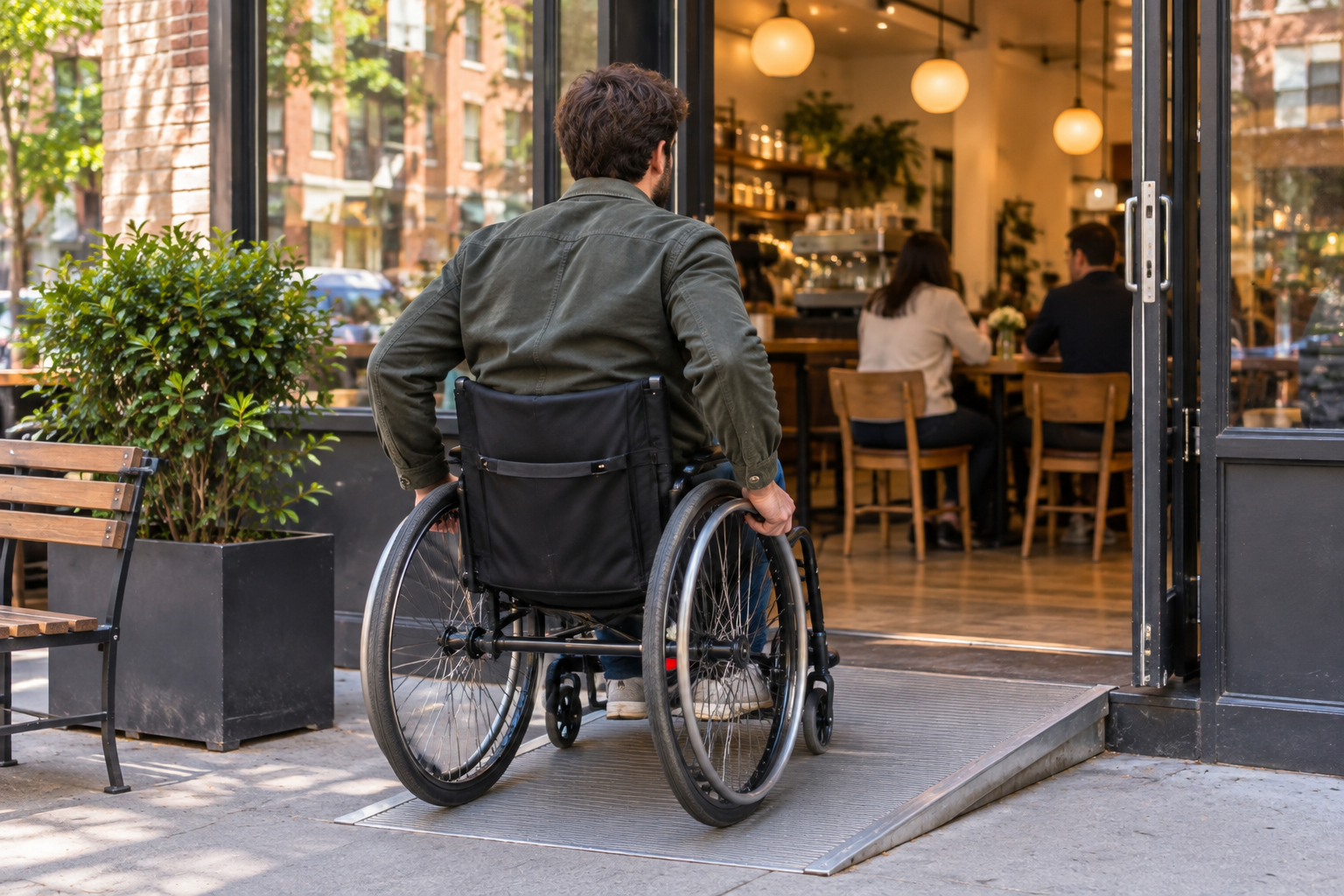
Wheelchair user rolling up a ramp into a café

We checked the court records for a sample of the firm’s 2026 cases. By mid November 2026:

  • The March 2026 website case was dismissed about seven weeks after filing, after the court was told the parties had settled in principle.
  • A wheelchair access case filed on May 4, 2026 was dismissed about five weeks later on the same basis.
  • Another wheelchair access case filed the same day was discontinued in late September 2026, after the court was told it had settled.
  • At least one case filed in April still had new court filings in November.

What the records don’t show is what anyone paid. Settlement terms in these cases are almost never public. The pattern tells you that many of these cases end in a few months, and that the businesses that respond on time have choices the ones that ignore the papers don’t. If you don’t respond at all, the plaintiff can ask for a default judgment and an order to make the changes.

This week:

  • Write down the date you were served and keep the envelope and every page.
  • For a building case, find your lease and tell your landlord or tenant, if they are not already named. Photograph and measure the entrance, tables, bar and restroom as they are today.
  • For a website case, save a record of how the pages named in the complaint look and behave today, and find out which parts of your site an outside ordering or reservations service controls.
  • Tell your insurance carrier. Don’t call the plaintiff’s lawyer yourself.

What can work in your defense

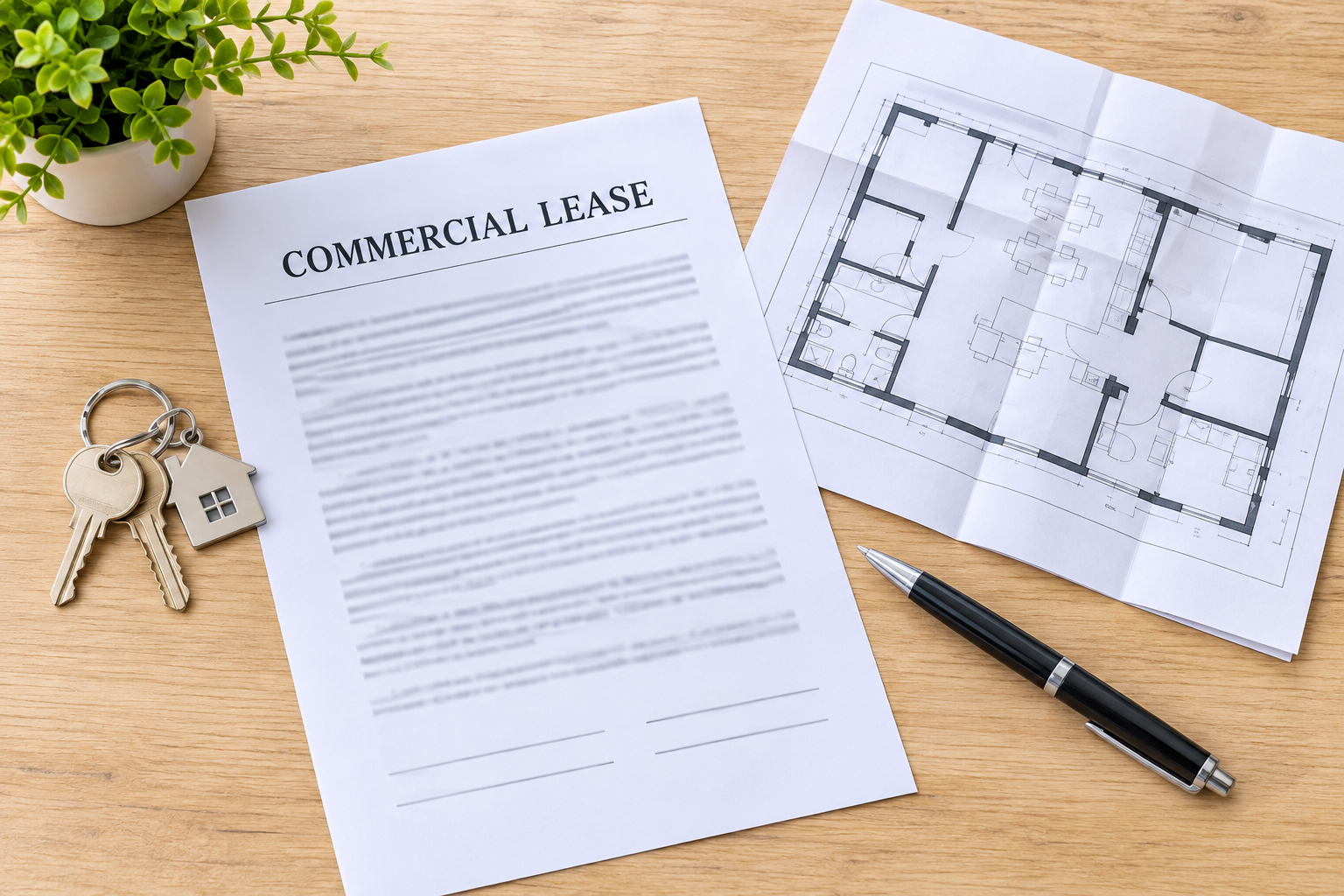
Lease, keys and floor plan on a table

What the law actually requires of your building. If your building predates 1993 and hasn’t been substantially altered, the question is usually what is readily achievable for your business: cost, the size of the business and its resources all count. A ramp or rearranged tables may be required; rebuilding a landmark storefront may not. The complaint’s claim that the building is newer is a belief, not a fact, and the building records can settle it. More in ADA lawsuits against New York restaurants.

Your landlord and your lease. Under the federal ADA rules, the owner and the tenant are both responsible for access, and the lease can decide who handles what between them. Read the repair, compliance with laws and indemnity clauses early. They may decide who pays for the work and the defense.

Standing. A plaintiff has to show a real plan to come back. In 2013 the Second Circuit, the federal appeals court that covers New York, held that a wheelchair user who lived a few blocks from a Manhattan diner and was kept out by its step could sue (Kreisler v. Second Avenue Diner Corp.). That decision helps plaintiffs, but it rested on facts like how close he lived and how often he went to diners nearby. A plaintiff who lives in another borough and has sued dozens of businesses gives you more to test. For website cases, the Second Circuit upheld the dismissal of five cases in 2022 because the plaintiffs’ statements that they would return were boilerplate (Calcano v. Swarovski North America). More: what standing means in an ADA lawsuit.

Fixing the problems, and proving it. Barriers that are actually removed, or website problems that are actually fixed and documented, can make the federal claim moot. Promises and partial fixes usually don’t. Fixing doesn’t automatically end the state and city money claims. More: fix your website before or after you respond?

What the money claims are really worth. The federal ADA claim can’t produce damages for the plaintiff, only an order to fix and attorney’s fees. The money comes from the state and city claims. See state and city law claims in ADA lawsuits.

How The Samuel Law Firm can help

Michael Samuel

Michael Samuel has defended about 100 ADA cases since 2019, in the federal courts in Manhattan and Brooklyn and in New York state court, including physical access cases as well as website cases. Website cases are handled for a flat fee that covers all the work up to trial, including a motion to dismiss.

When a Gabriel A. Levy complaint comes in, we confirm the service date, work out whether it is a building case or a website case, look at the plaintiff’s other lawsuits, check the building records or test the website as it is today, and read your lease. Then we tell you what a defense looks like and what a realistic resolution looks like, before you decide anything.

For the website itself, we work with Codexyo, an independent web accessibility team that fixes sites like yours. They are not lawyers, and you’re free to use anyone.

Call (212) 563-9884 before your answer deadline, or upload the complaint to our free complaint checker for a plain-English summary first. Our written dismissals, with the courts and index numbers, are on the results page. Prior results do not guarantee a similar outcome. Other firms we have written about that file building cases: Jennifer Tucek, The Weitz Law Firm and The Marks Law Firm.

Frequently asked questions

These cases are in federal court, so you generally have 21 days after you are served to answer or move to dismiss. If you signed and returned a request to waive service, you have 60 days from the date the request was sent. Have a lawyer confirm the exact date right away.

In the firm’s wheelchair access cases, the complaint usually names both the business and the company that owns the building. Under the federal ADA rules, both are responsible for access, and the lease can decide who handles what between them. Find your lease and read the repair, compliance and indemnity clauses.

The website complaints are written as class actions on behalf of blind users nationwide and in New York. A class is not certified unless the court approves it, and many of these cases settle with the one plaintiff long before that. Until a court certifies a class, the case is in practice about the one plaintiff.

Not necessarily. Buildings built for first occupancy after January 26, 1993 have to meet the new construction standards. Older buildings generally have to remove barriers where that is readily achievable, meaning easy to do without much difficulty or expense for your business.

Fixing the barriers or the website, and documenting it, can make the federal ADA claim moot, and courts have dismissed cases on that basis. Partial fixes or promises usually aren’t enough. The state and city law claims for money can survive, so talk to a lawyer before relying on a fix alone.

It’s better not to. Anything you say can be used in the case, and your deadline keeps running while you talk. Let your lawyer make the first contact.

Talk it through

Free consultation, flat fee quoted before you commit

I am Michael Samuel. I have practiced law in New York since 1993 and I have handled roughly a hundred ADA accessibility matters, most of them website cases, for the business on the receiving end. If a letter or a lawsuit about your website has arrived, the first call costs nothing and you will get a straight answer about where you stand. I handle website accessibility defense on a flat fee, quoted before you commit, so you know the number up front.

Recent decisions in these cases, with the courts and index numbers, are on my results page. Prior results do not guarantee a similar outcome. If your letter came from a firm we have written about, see what to know about Equal Access Law Group letters and what to know about Apex Trial Law letters.

For a free consultation, call 212-563-9884, email michael@thesamuellawfirm.com, or use the contact form.

Attorney Advertising. This article is general information about New York law and is not legal advice about your situation. Reading it does not create an attorney client relationship.


The Samuel Law Firm
1441 Broadway, Suite 6085
New York, NY 10018
212-563-9884

Contact Us

Sued, owed wages, or injured? Talk to a New York litigator today.

The Samuel Law Firm is a litigation firm in Manhattan. Michael Samuel defends businesses in ADA lawsuits, website and premises, in wage and hour cases, and in contract and commercial disputes, and represents employees owed wages and people injured by negligence. He has practiced in New York since 1993 and appears in the Southern and Eastern Districts of New York and the New York state courts. Call 212-563-9884 for a free consultation; he answers directly