Personally Sued Over a Merchant Cash Advance? What Your Personal Guarantee Means

Why your name is on the lawsuit, and the date that matters

By Michael Samuel, New York litigator

Auto shop owner reading papers in the garage doorway

When a merchant cash advance funder sues in New York, it almost never sues the business alone. The captions of the suits filed this fall in Kings County (Brooklyn) Supreme Court and other New York courts name the company and, next to it, a person: the owner who signed the personal guarantee.

That makes you a defendant in your own right. If the funder wins against you personally, the judgment is against you, not just the company.

The date that matters. You and the business each have a deadline: generally 20 days to respond if the summons was handed to you personally, and 30 days if it was served another way. The company has to respond through a lawyer. You can answer for yourself, but you can’t answer for the company, and an answer that only covers you leaves the company in default.

What the personal guarantee usually says

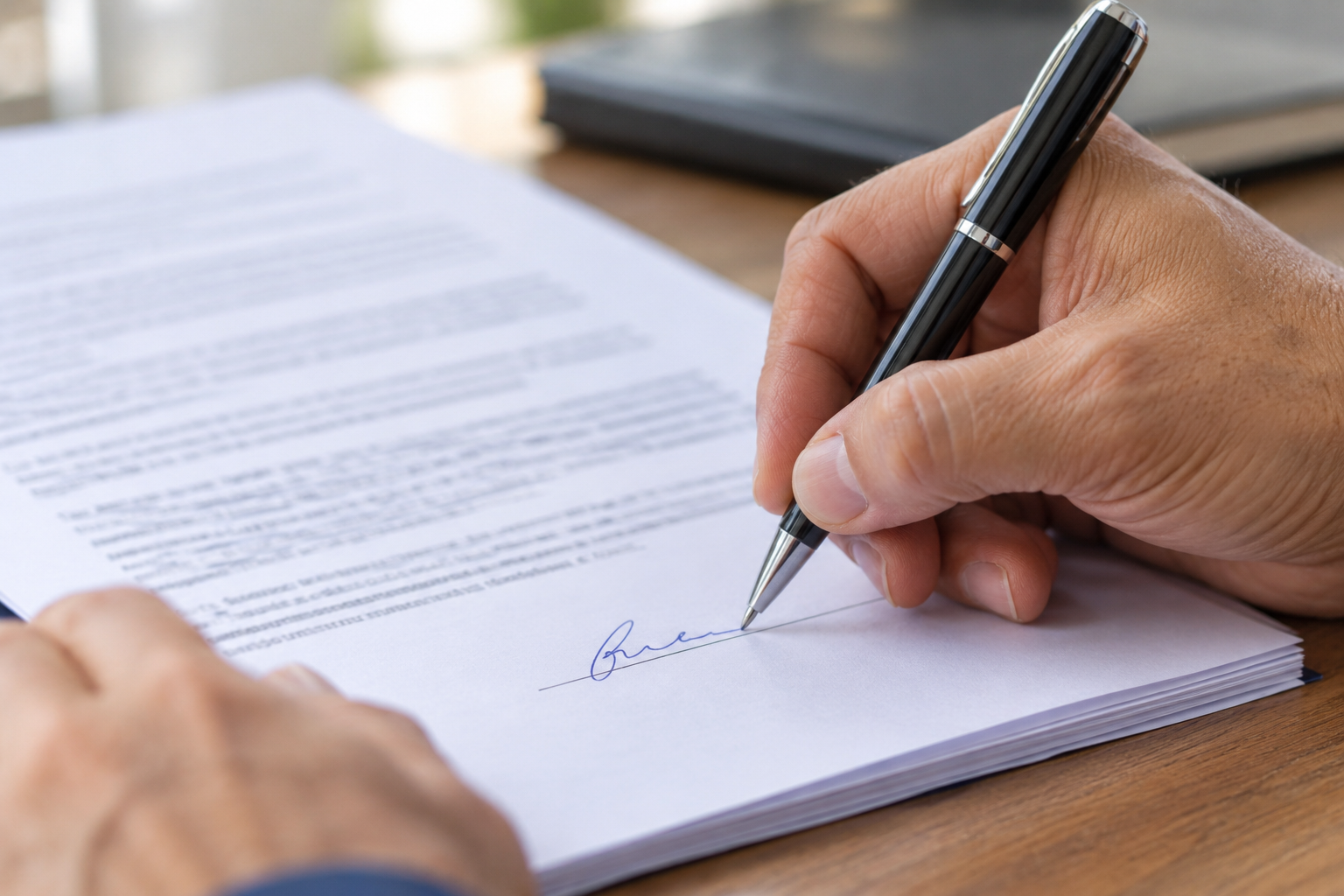
Hand signing the last page of an agreement

It is often titled a “guaranty of performance.” In a merchant cash advance, the funder buys a share of your future sales. On paper, the funder takes the risk that sales slow down or the business fails. The guarantee is usually written to cover something narrower: that the business will keep its promises under the agreement, such as depositing its sales into the agreed account, not blocking the daily or weekly debits, and not taking another advance without permission.

In court, funders treat it as a guarantee of the whole balance. The complaint will say the business breached, usually by stopping payments or blocking debits, and that you owe everything that is left, plus fees. New York judges have often agreed:

  • In December 2025 a Kings County judge held that an owner’s guarantee was “absolute and unconditional,” making him liable together with the business for the default (EN OD Capital v. Jac Contracting Services LLC, 2025 NY Slip Op 34851(U)).
  • In April 2025 another Kings County judge granted judgment against an owner who had signed a “Personal Guaranty of Performance,” rejecting his arguments that the deal was a disguised loan and that he signed under economic pressure (Syndicate Group USA, Inc. v. Fast Guard Service LLC, 2025 NY Slip Op 31299(U)).
  • In March 2024 a Nassau County judge dismissed an owner’s defenses, including that the guarantee didn’t cover payment and that he signed only as a manager, because they were stated as conclusions with no facts behind them. The funder’s motion wasn’t opposed (Pearl Delta Funding, LLC v. Regal Auto Credit, Inc., 2024 NY Slip Op 35270(U)).

The lesson from those decisions isn’t that owners always lose. It is that a defense has to be built from documents and sworn facts, not from a form answer.

Where owners have won ground

Bank statements, highlighter and calculator on a workbench

The amount. In the December 2025 case, the judge found the owner liable but refused to award the $341,022 the funder demanded, because the funder’s own payment history showed a balance of $246,072 and it never explained the difference. Check every number in the complaint against your bank statements.

Default fees. In the April 2025 case, the court excluded a $10,000 default fee as a penalty the funder hadn’t justified. A Monroe County judge struck BizFund’s default fee as a penalty in 2025 and again in 2026. More in Sued by BizFund?

What actually happened to the business. The guarantee is aimed at a breach, not a bad month. If sales really fell and the debits failed because the money wasn’t there, that is different from blocking the funder’s access or moving your deposits to a new account. Courts that uphold these agreements as purchases of future sales, and not loans, point to that same feature: repayment depends on your sales. Your bank records are the evidence.

Reconciliation, in writing. Most agreements let you ask the funder to lower the payments when sales drop. In the April 2025 case the owner said he had asked, but the contract required the request in writing and he had no record of one, so it didn’t help him. If you asked for a reconciliation, find the emails and whatever you sent with them.

Whether it is really a loan. If the agreement works like a loan, with a fixed term and no real way to adjust the payments, New York’s usury laws may apply. It is a hard defense, and courts reject it more often than they accept it. More: merchant cash advance lawsuit in New York.

Service and jurisdiction. You have to be served properly, and so does the company. If you live outside New York, the funder is relying on a clause in the agreement that chooses New York courts. More: sued in New York as an out-of-state business.

What a judgment against you personally means

House with a work van parked in the driveway

If the funder gets a judgment against you, it can use New York’s collection tools against your own property, not just the company’s: restraining bank accounts in your name, garnishing wages and placing liens. If you live in another state, the funder can take the New York judgment to a court there and enforce it locally.

If a default judgment has already been entered, New York law lets a court reopen it in some situations, for example where you had a reasonable excuse and move within a year of being served with the judgment, or where you were never personally served and didn’t learn of the case in time to defend. Both require a real defense and fast action. See “If a judgment was already entered” in our guide to merchant cash advance lawsuits.

What to do this week.

  • Write down how and when you and the company were each served.
  • Find the agreement, the guarantee page and every addendum.
  • Pull the business bank statements from the funding date to today.
  • Collect every email and text with the funder or its collectors, especially about lowering the payments.
  • Don’t sign a settlement or a payment plan before a lawyer reads it, and don’t assume that talking to the funder stops your court deadline.

How The Samuel Law Firm can help

Michael Samuel

Michael Samuel is a New York litigator, in practice since 1993, who defends businesses and their owners in contract and commercial lawsuits in the New York state and federal courts, including suits by merchant cash advance funders. Where you live doesn’t matter: the case is in New York, and we handle it there.

When an owner is sued on a guarantee, we start with the agreement and the bank statements: what the guarantee actually covers, what happened to the payments and why, whether the balance and fees are right, whether you and the company were properly served, and whether the deal can be challenged as a loan. Then we tell you what a defense looks like and what a realistic resolution looks like, before you decide anything.

The firm handles the defense for a fixed fee, quoted up front, and the first strategy session is free. Call (212) 563-9884 before your answer deadline. More on how we defend these cases is on our contract and commercial litigation defense page. Funders we have written about: BizFund and Biz Capital Miami.

Frequently asked questions

Yes, if you signed a personal guarantee, and most agreements include one. Funders usually name the owner as a defendant alongside the business. A judgment against you personally can be collected from your own accounts and property.

It is a guarantee that the business will keep its promises under the agreement, such as depositing its sales and not blocking the funder’s debits. On paper it is narrower than a promise to repay no matter what. In lawsuits, funders argue that a breach makes the owner liable for the full balance, and New York courts have often agreed.

It depends on why the payments stopped and what the agreement says. These agreements are written so that the funder bears the risk of a slowdown or failure that isn’t a breach. Funders usually claim there was a breach, so your bank records and your communications with the funder matter.

Yes. You and the company are separate defendants, each with a deadline. The company must appear through a lawyer. If only one of you responds, the other can end up in default.

Only after it gets a judgment against you personally. With a judgment, New York law allows restraints on bank accounts, wage garnishment and liens, and the judgment can be enforced in other states. Some property and income are protected by law, which is another reason to get advice early.

Yes. The funder can bring a New York judgment to a court in your state and enforce it there. Whether New York was a proper place to sue you in the first place can be a defense, but you have to raise it in the New York case.

Talk it through

Free strategy session, fixed fee quoted before you commit

I am Michael Samuel. I have practiced law in New York since 1993, and I defend businesses that are sued in the New York state and federal courts, including by merchant cash advance funders. If your company has been served, the first strategy session costs nothing and you will get a straight answer about where you stand. I handle the defense for a fixed fee, quoted before you commit, so you know the number up front.

For more on how I defend these cases, see my contract and commercial litigation defense page.

For a free strategy session, call 212-563-9884, email michael@thesamuellawfirm.com, or use the contact form.

Attorney Advertising. This article is general information about New York law and is not legal advice about your situation. Reading it does not create an attorney client relationship.


The Samuel Law Firm

1441 Broadway, Suite 6085

New York, NY 10018

212-563-9884

Contact Us

Sued, owed wages, or injured? Talk to a New York litigator today.

The Samuel Law Firm is a litigation firm in Manhattan. Michael Samuel defends businesses in ADA lawsuits, website and premises, in wage and hour cases, and in contract and commercial disputes, and represents employees owed wages and people injured by negligence. He has practiced in New York since 1993 and appears in the Southern and Eastern Districts of New York and the New York state courts. Call 212-563-9884 for a free consultation; he answers directly