Sued by The Weitz Law Firm? What a New York Business Owner Needs to Know

Your 21 day deadline, what the court records show, and what a premises defense looks like.

By Michael Samuel, ADA defense attorney in New York

Legal papers on a restaurant counter

If you just received a summons and complaint naming The Weitz Law Firm, P.A., or attorney B. Bradley Weitz, you are almost certainly a restaurant, bar, cafe, shop, salon or other storefront business in New York City, and the complaint is about your front door, your ramp, your restroom or your counter, not your website. This firm has filed physical access lawsuits under the Americans with Disabilities Act against New York businesses for more than fifteen years, and it files them in batches. Court records show 27 cases filed by the firm in the Southern District of New York in the twelve months to September 2026, 13 of them in September 2026 alone.

My name is Michael Samuel. I am an ADA defense attorney in New York, admitted in 1993, and I have defended more than 100 businesses in ADA accessibility lawsuits, including physical access cases against restaurants, retail stores and building owners. This article explains who filed your lawsuit, what it claims, what your deadline is, and what resolving it realistically looks like.

The most important fact first. The Weitz Law Firm files in federal court, in the Southern District of New York in Manhattan. In federal court you generally have 21 days to respond after being served. The exact deadline is printed on your summons. The clock started when you were served, so do not wait to get counsel involved.

Who Is The Weitz Law Firm?

Federal courthouse in lower Manhattan

The Weitz Law Firm, P.A. is a Florida law firm led by attorney Ben-Zion Bradley Weitz, who signs his New York filings as B. Bradley Weitz. He built a practice filing ADA access cases in Florida and began filing them in New York in 2009. By 2012 the New York Times reported he had sued close to 200 New York businesses, most of them in federal court in Manhattan, using a small group of repeat plaintiffs. In 2013 a federal judge in Brooklyn refused to award the firm its fees in a default case, writing that the “drafting” time claimed reflected “cutting and pasting old defendants in place of new defendants.”

The pattern today is the same, with new plaintiff names. In the cases filed over the past year, the plaintiffs are most often named Norris and Velasquez; court records show Namel Norris alone has been named as plaintiff in more than 200 federal cases in New York since 2014. The defendants are neighborhood businesses: a coffee shop, a gnocchi restaurant, a threading salon, a dry cleaner, a kitchen and bath showroom, a movie theater and, in the latest batch, restaurants on St. Marks Place in the East Village. The cases arrive in groups: three on October 22, 2025, seven on September 2, 2026, and six more between September 22 and 24, 2026.

Filing a large number of similar lawsuits is lawful, and courts treat each case on its own merits. What it means for you, practically, is that your lawsuit is not personal and not unusual. It follows a template, and so does the path to resolving it.

What the Lawsuit Claims, and What the Law Actually Requires

Restaurant entrance with a step and a portable ramp

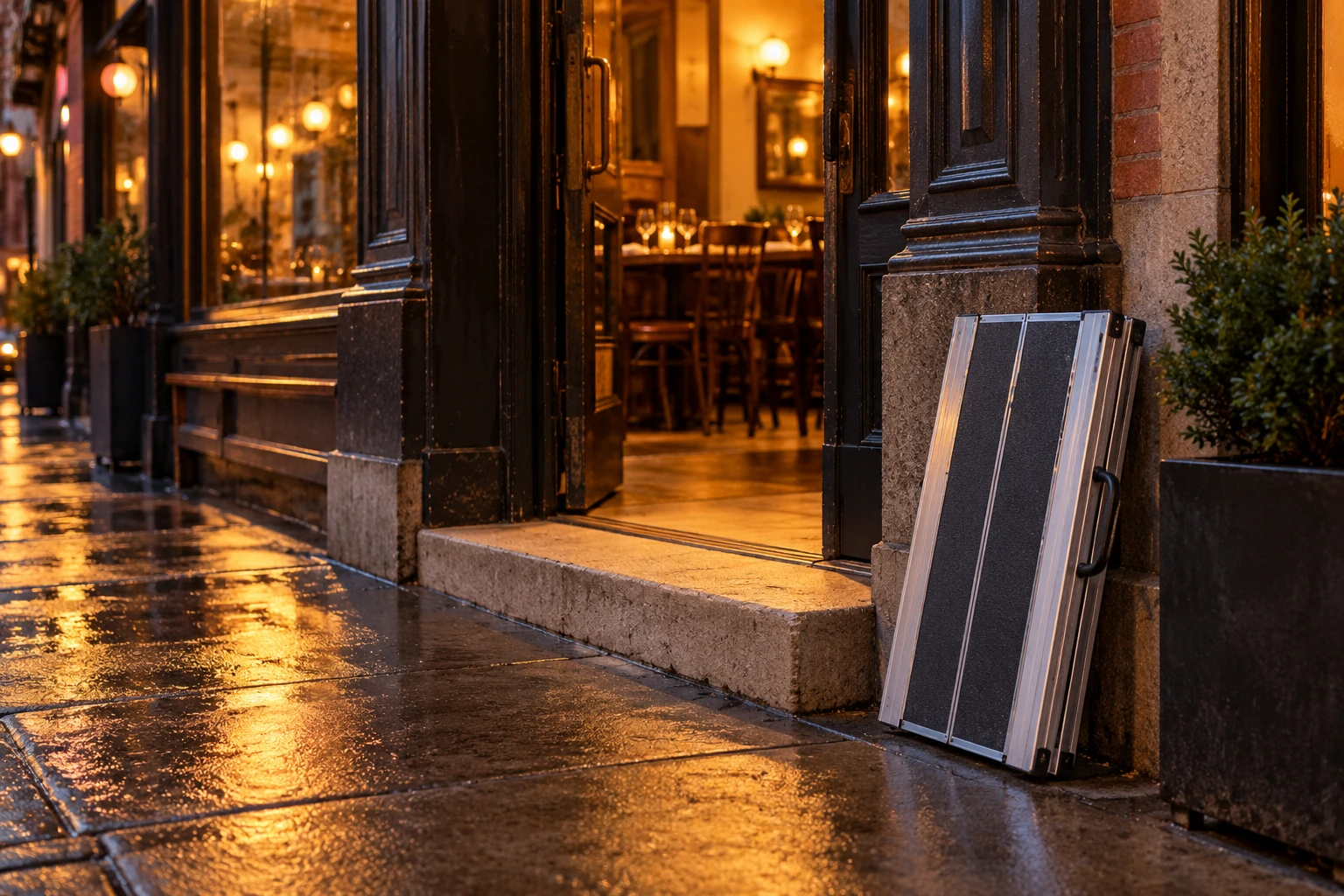
A Weitz complaint typically alleges that a plaintiff who uses a wheelchair or has another mobility disability visited your business, or wanted to, and was kept out or could not use it because of physical barriers. The usual list: a step at the entrance with no ramp, a door that is too heavy or too narrow, aisles or a path of travel that are too tight, a counter or table that is too high, a restroom without grab bars or turning space, or a restroom door that needs a twisting grip to open.

The complaint will assert a claim under Title III of the ADA, which allows the plaintiff to demand that the barriers be removed and to recover attorneys’ fees, together with claims under the New York State Human Rights Law and the New York City Human Rights Law, which allow damages. The damages demanded are usually modest. The attorneys’ fees are the economic engine of the case, and they are why resolving it early costs far less than resolving it late.

Is it a real compliance problem or a volume lawsuit? Usually both. Manhattan storefronts are old, many have a step at the door, and the ADA’s design standards are detailed. At the same time, the law does not require a small business to rebuild its building. For existing buildings, Title III requires the removal of barriers only where removal is “readily achievable,” meaning easily accomplished without much difficulty or expense in light of the business’s resources. A portable ramp and a doorbell, a lowered section of counter, a grab bar in the restroom and rearranged shelving often satisfy that standard. A defense lawyer who handles these cases knows what remediation a court will actually require, which is very different from what the complaint demands.

What to Do in the First 48 Hours After Being Served

Tape measure across a restroom doorway
  1. Do not ignore it. Federal courts enter default judgments against businesses that miss their deadline, and the fee award after a default is larger than the settlement would have been on day one.
  2. Preserve the complaint and any letters. Forward everything to counsel. Do not call the plaintiff’s firm yourself.
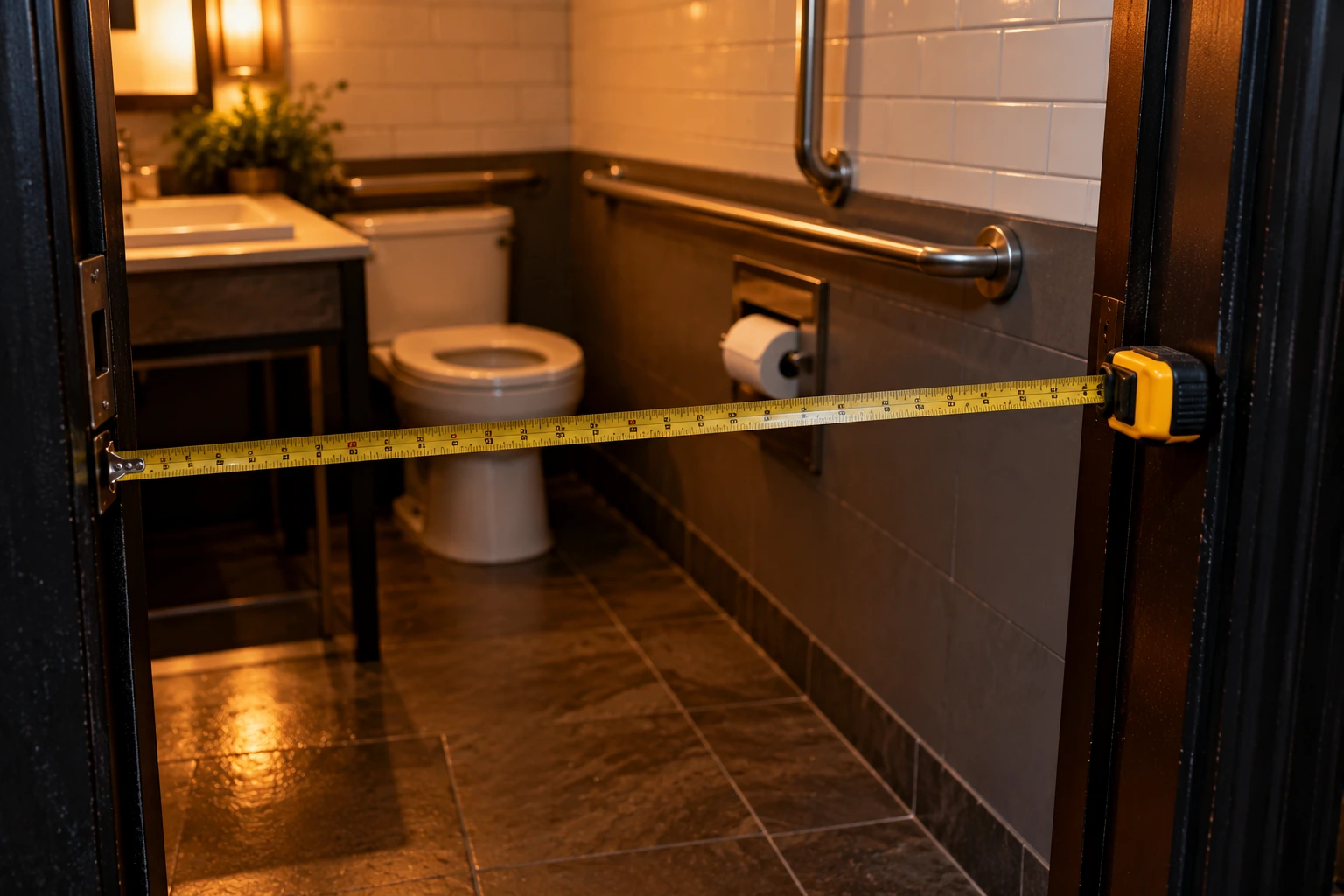
  3. Photograph the premises as they are today. The entrance, the path from the door to the register, the restroom and the counter, with a tape measure in the frame where you can. The complaint describes barriers; your photographs are the other side of that story.
  4. Tell your landlord. Landlords and tenants are frequently named together, and the lease usually says who is responsible for what. Do not sign anything with the landlord about it until counsel has read the lease.
  5. Tender the claim to your insurance carrier. Some general liability policies respond to these claims or contribute to defense costs. It costs nothing to ask.
  6. Call a defense attorney who has handled Weitz Law Firm cases. The remediation that ends the case and the remediation the complaint demands are not the same list.

What Defending the Case Looks Like

Commercial lease on a desk

Most of these cases resolve through a negotiated settlement with a payment and a written commitment to specific, achievable fixes on a schedule. The defenses matter to the numbers. Whether the plaintiff actually visited and genuinely intends to return, whether each barrier in the complaint exists as described, whether removal is readily achievable for a business of your size, and whether the fees claimed are reasonable are all questions a court will take seriously; the 2013 fee decision against this firm is proof of that. An experienced defense lawyer evaluates all of it, and reads your lease, before any money is discussed.

I am currently defending a New York business sued by this firm: Norris v. Costcut Quality Corp., S.D.N.Y. No. 1:26-cv-01895.

Frequently Asked Questions

East Village storefronts at dusk

How many days do I have to respond to a Weitz Law Firm complaint?

The firm files in federal court, where you generally have 21 days to respond after service. Count from the day you were served, not the day the case was filed, and confirm your exact deadline with counsel immediately, because missing it can result in a default judgment.

Is The Weitz Law Firm a legitimate law firm?

Yes. It is a real Florida law firm whose cases are filed in real courts with real judges, and it has been filing ADA access cases in New York since 2009. The volume of filings is a pattern worth understanding, not a reason to assume your case will go away on its own.

Do I have to make my whole building accessible?

No. For an existing building, the ADA requires removal of barriers where removal is readily achievable, which depends on the difficulty, the cost and the resources of the business. Portable ramps, lowered counter sections, grab bars and rearranged aisles are common, achievable fixes.

My landlord owns the building. Why am I being sued?

Title III applies to both the owner and the operator of a place of public accommodation, so tenants and landlords are routinely named together. Who pays for what between you is usually governed by the lease, which is why counsel reads it first.

Can I just install a ramp and make the lawsuit go away?

Remediation is the core of the defense, but a fix made after suit does not automatically end the case, and the plaintiff’s fees for work done before the fix remain in play. How the remediation is done, documented and presented is what turns it into a resolution.

What does it cost to defend a Weitz Law Firm lawsuit?

Premises cases are quoted after I see the complaint and the premises, and you will know the cost of the defense before you decide anything. A case answered on time and negotiated early is usually resolved for a fraction of what the same case costs after a default.

Sued by The Weitz Law Firm

If You Have Been Served, Do This Today

Bring your summons and complaint to a defense lawyer who handles these specific cases, before your response deadline, not after. I review new ADA filings in the New York courts every day, I know the firms that file them, and I will tell you plainly what your case is and what it should take to end it.

Call me directly at 212-563-9884, or learn more about our ADA defense practice in New York. If your case is about your website rather than your premises, see the pages on Gottlieb & Associates, Joseph & Norinsberg, Mizrahi Kroub and Shaked Law Group. If you received a demand letter instead of a lawsuit, see Equal Access Law Group and Apex Trial Law.

Michael Samuel has practiced law in New York for more than 30 years and has defended more than 100 businesses in ADA accessibility lawsuits. He was admitted to the New York bar in 1993 (Registration No. 2563005) and is admitted before the United States District Courts for the Southern and Eastern Districts of New York.

Attorney Advertising. This article is for general information only and is not legal advice. Reading it does not create an attorney client relationship. Every case is different. Consult a lawyer about your specific situation. Factual statements about filing volume are based on public court records; statements about the firm’s history are based on published court decisions and news reporting.

Contact Us

Sued, owed wages, or injured? Talk to a New York litigator today.

The Samuel Law Firm is a litigation firm in Manhattan. Michael Samuel defends businesses in ADA lawsuits, website and premises, in wage and hour cases, and in contract and commercial disputes, and represents employees owed wages and people injured by negligence. He has practiced in New York since 1993 and appears in the Southern and Eastern Districts of New York and the New York state courts. Call 212-563-9884 for a free consultation; he answers directly