Sued by KSS Law? What a New York Business Owner Needs to Know

Your state court deadline, what the records show, and what a defense looks like

By Michael Samuel, ADA defense attorney in New York

Kings County Supreme Court building in Brooklyn on a bright morning

If you just received a summons and complaint naming KSS Law PLLC, or attorney Kimmia Salehi, you are not alone. KSS Law files ADA accessibility lawsuits against businesses in New York State Supreme Court in Brooklyn, the Bronx and Manhattan, and new KSS Law cases show up in those courts regularly.

My name is Michael Samuel. I am an ADA defense attorney in New York, admitted in 1993, and I have defended about 100 ADA cases since 2019, most of them about websites. This article explains who filed your lawsuit, what it asks for, what your deadline is, and what a defense realistically looks like.

The most important fact first. These cases are in state court, not federal court, and the deadline works differently. You generally have 20 days to respond if the papers were handed to you personally in New York, and 30 days if they were served another way. For many businesses, the clock started on a day nobody noticed. The deadline section below explains why.


Who KSS Law is

Eleven identical folders fanned out on a white table

KSS Law PLLC is the law firm of New York attorney Kimmia Salehi. Her name already appears on the federal court records. In April 2024, as an attorney with Mars Khaimov Law, PLLC of Hicksville, she filed 11 website accessibility lawsuits in Manhattan federal court for one blind plaintiff, Sanjay Sookul, against 11 different businesses, all within two days. All 11 of those cases are now closed.

The same plaintiff, through the same firm, was also behind Sookul v. Fresh Clean Threads (2024), one of the Manhattan federal decisions holding that the ADA doesn’t cover a business that exists only online. Today KSS Law files in state court, where claims under New York State and New York City human rights law sit alongside the ADA.

None of that makes your lawsuit less real. A KSS Law complaint is a court case with a deadline, and it should be treated that way from the day it arrives.

What the complaint is asking for

Blind woman using a screen reader on her phone at a café counter

Website accessibility complaints from this attorney follow a familiar pattern. Her 2024 federal complaints, for example, were class actions with a jury demand that stacked five claims on one set of facts: the ADA, the New York State Human Rights Law, the New York Civil Rights Law (which they said entitled the plaintiff to $500 per violation), the New York City Human Rights Law, and a request for a court declaration.

Each piece asks for something different. The ADA claim asks for an order to fix the website plus attorney’s fees. The money comes from the state and city law claims. The complaint will also name a plaintiff who says they are blind and use a screen reader, describe a visit to your website, list the barriers they say they hit, and say they intend to come back.

Those last details matter more than they look, because they are where many defenses begin. See how to read an ADA lawsuit complaint, or upload yours to our free complaint checker for a plain-English summary of who is suing, what they want and the date to plan around.

Your deadline, and the trap most businesses miss

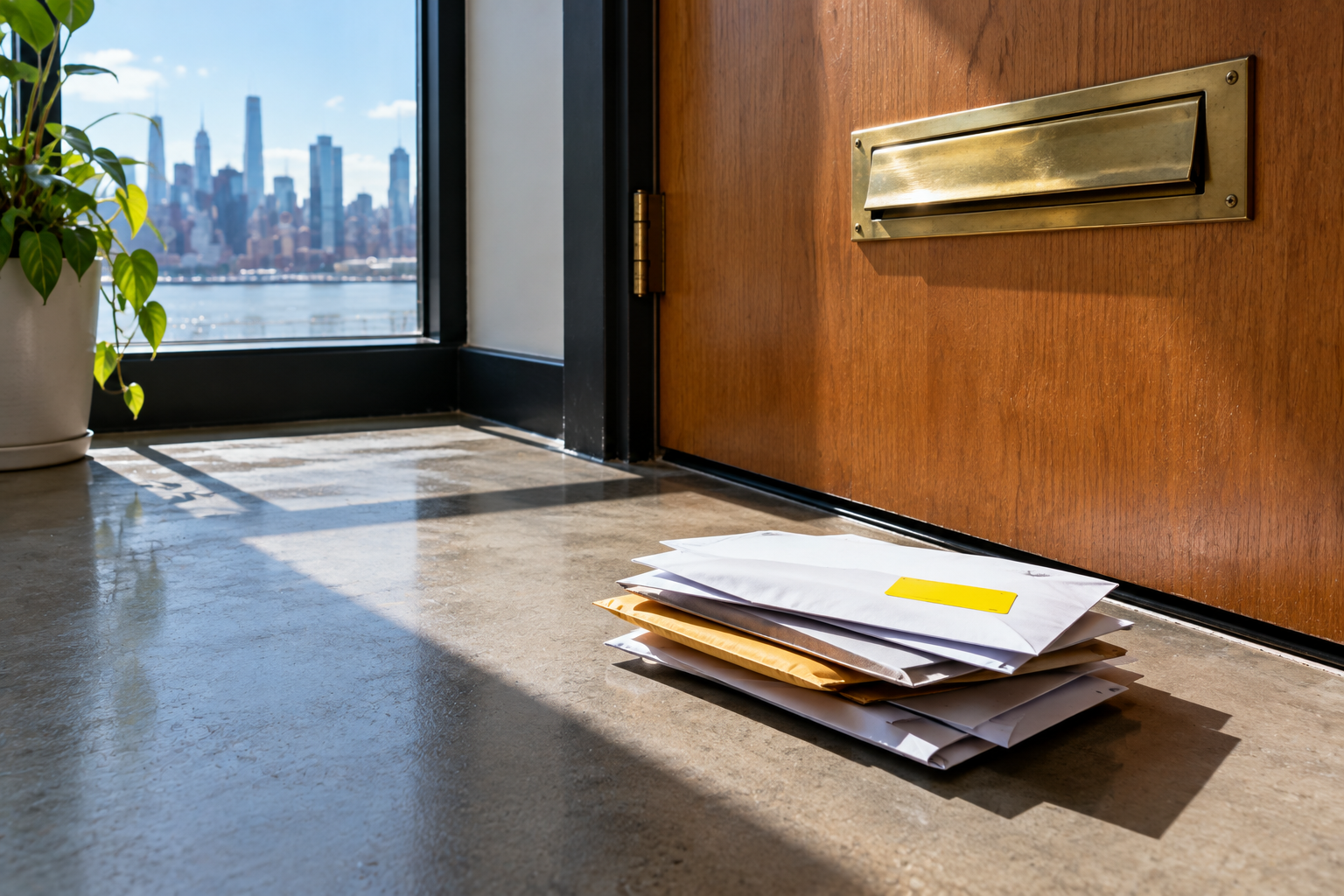
Unopened mail on the floor below an office door's mail slot

The basic rule. In New York state court you generally have 20 days to respond if the summons was handed to you personally in New York, and 30 days if it was served another way. The deadline is counted from service, not from the day you happened to read the papers.

The trap. Many corporations and LLCs are served through the New York Secretary of State. Service is complete when the Secretary of State receives the papers. The state then mails a copy to whatever address your business has on file, which may be an old office, a former accountant or a registered agent nobody checks. By the time the papers reach you, much of your time may already be gone.

What happens if you miss it. If you don’t respond in time, the plaintiff can ask the court for a default judgment, and you lose the chance to argue any of the defenses below. If you’re unsure when you were served, have a lawyer check the court file and the affidavit of service right away.

Don’t call KSS Law yourself. Let your lawyer make the first contact. What you say can be used in the case, and the first conversation often sets the tone for any resolution.

What can work in your defense

Wide view of the New York County courthouse steps on a sunny day

Standing. A plaintiff has to show a real injury and a real intention to return to your website. When the same plaintiff files dozens of near-identical lawsuits, courts look at those claims harder. In June 2026, in Sumlin v. Royal Batch, the Manhattan state court dismissed a website accessibility complaint we defended, finding the serial plaintiff’s standing allegations inherently incredible. In July 2026, in Alexandria v. Just Shades, the same court dismissed another complaint we defended in its entirety; that plaintiff had filed 54 near-identical lawsuits. Both decisions, with the index numbers, are on our results page. Prior results do not guarantee a similar outcome.

Online-only businesses. Some New York federal judges have ruled the ADA doesn’t cover a business with no physical store. In state court, the ADA claim isn’t the only one, and the city law covers any “place or provider” of public accommodation, so this argument helps less on its own. See can an online-only business be sued under the ADA.

Fixing the site, done right. A properly fixed and documented website can take the ADA claim off the table and protects you from the next plaintiff, but it doesn’t erase the state and city claims by itself. See whether to fix your website before or after you respond.

Resolving it early. Many of these cases end in a negotiated resolution. When that’s the right answer, getting there early, before fees build up on both sides, usually costs less. See how much it costs to settle an ADA website case.

How The Samuel Law Firm can help

Michael Samuel has defended about 100 ADA cases since 2019, most of them about websites. For website cases, the firm charges a flat fee that covers all work up to trial, including a motion to dismiss.

When a client’s site is being fixed, we line up the timing and the documentation with the legal strategy, so the work counts in the case and not just on the site.

For the website itself, we work with Codexyo, an independent web accessibility team that fixes sites like yours. They are not lawyers, and you’re free to use anyone.

Frequently asked questions

In New York state court, generally 20 days if the summons was handed to you personally in New York and 30 days if it was served another way, counted from service. If your business was served through the Secretary of State, the clock may have started before the papers reached you, so have a lawyer check the service date right away.

Let your lawyer make the first contact. What you say can be used in the case, and the first conversation often sets the tone for any resolution.

Yes. KSS Law PLLC is the firm of a New York attorney, and a complaint it files is a real court case with a real deadline, even if the same plaintiff has sued many other businesses. Ignoring it can lead to a default judgment.

It may, but less in state court. A Manhattan federal judge ruled in 2025 that the ADA doesn’t cover online-only businesses, but New York City’s human rights law covers any place or provider of public accommodation, and state courts haven’t settled how that applies to online-only businesses.

Some cases like these can. In 2026 the firm won dismissals of two website accessibility lawsuits in Manhattan state court, including one where the court found a serial plaintiff’s standing allegations inherently incredible. Whether yours can be depends on the complaint and the facts, and prior results do not guarantee a similar outcome.

Talk it through

Free consultation, flat fee quoted before you commit

I am Michael Samuel. I have practiced law in New York since 1993 and I have handled roughly a hundred ADA accessibility matters, most of them website cases, for the business on the receiving end. If a letter or a lawsuit about your website has arrived, the first call costs nothing and you will get a straight answer about where you stand. I handle website accessibility defense on a flat fee, quoted before you commit, so you know the number up front.

Recent decisions in these cases, with the courts and index numbers, are on my results page. Prior results do not guarantee a similar outcome. If your letter came from a firm we have written about, see what to know about Equal Access Law Group letters and what to know about Apex Trial Law letters.

For a free consultation, call 212-563-9884, email michael@thesamuellawfirm.com, or use the contact form.

Attorney Advertising. This article is general information about New York law and is not legal advice about your situation. Reading it does not create an attorney client relationship.


The Samuel Law Firm

1441 Broadway, Suite 6085

New York, NY 10018

212-563-9884

Contact Us

Sued, owed wages, or injured? Talk to a New York litigator today.

The Samuel Law Firm is a litigation firm in Manhattan. Michael Samuel defends businesses in ADA lawsuits, website and premises, in wage and hour cases, and in contract and commercial disputes, and represents employees owed wages and people injured by negligence. He has practiced in New York since 1993 and appears in the Southern and Eastern Districts of New York and the New York state courts. Call 212-563-9884 for a free consultation; he answers directly