Sued by Barducci Law Firm? What a New York Business Owner Needs to Know

Who is suing you, what they want, and the date that matters

By Michael Samuel, ADA defense attorney in New York

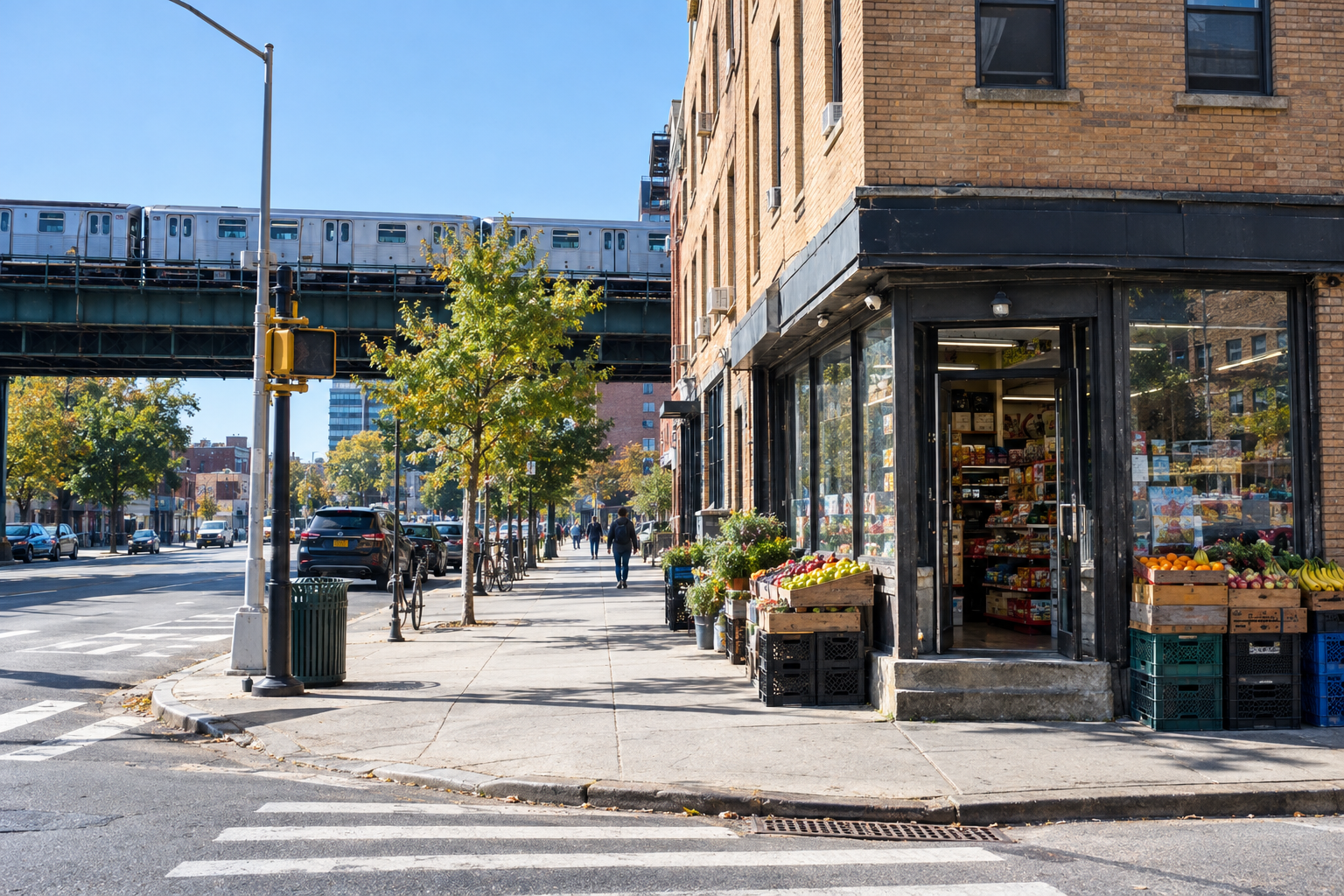
Corner deli with a raised front step in Long Island City, Queens

If you just received a summons and complaint signed by Maria-Costanza Barducci of the Barducci Law Firm, PLLC, you are not alone. Court records show 43 ADA lawsuits filed by her office in New York’s federal courts between January 1 and October 14, 2026: 28 in Brooklyn, in the Eastern District of New York, and 15 in Manhattan, in the Southern District. Her lawsuits are about physical access, such as entrances, bars, tables and restrooms, not websites.

My name is Michael Samuel. I am an ADA defense attorney in New York, admitted in 1993, and I have defended about 100 ADA cases since 2019, including physical access cases as well as website cases. This article explains who is suing you, what the complaint asks for, what happens if you don’t respond, and what can work in your defense.

The most important fact first. These are federal lawsuits. You generally have 21 days to respond after you are served, so the date you were served matters more than the date you opened the envelope. The court records also show what happens to owners who let that date pass, and it isn’t a small check. It’s a court order to renovate on a schedule.

Who Barducci Law Firm is, and who the plaintiffs are

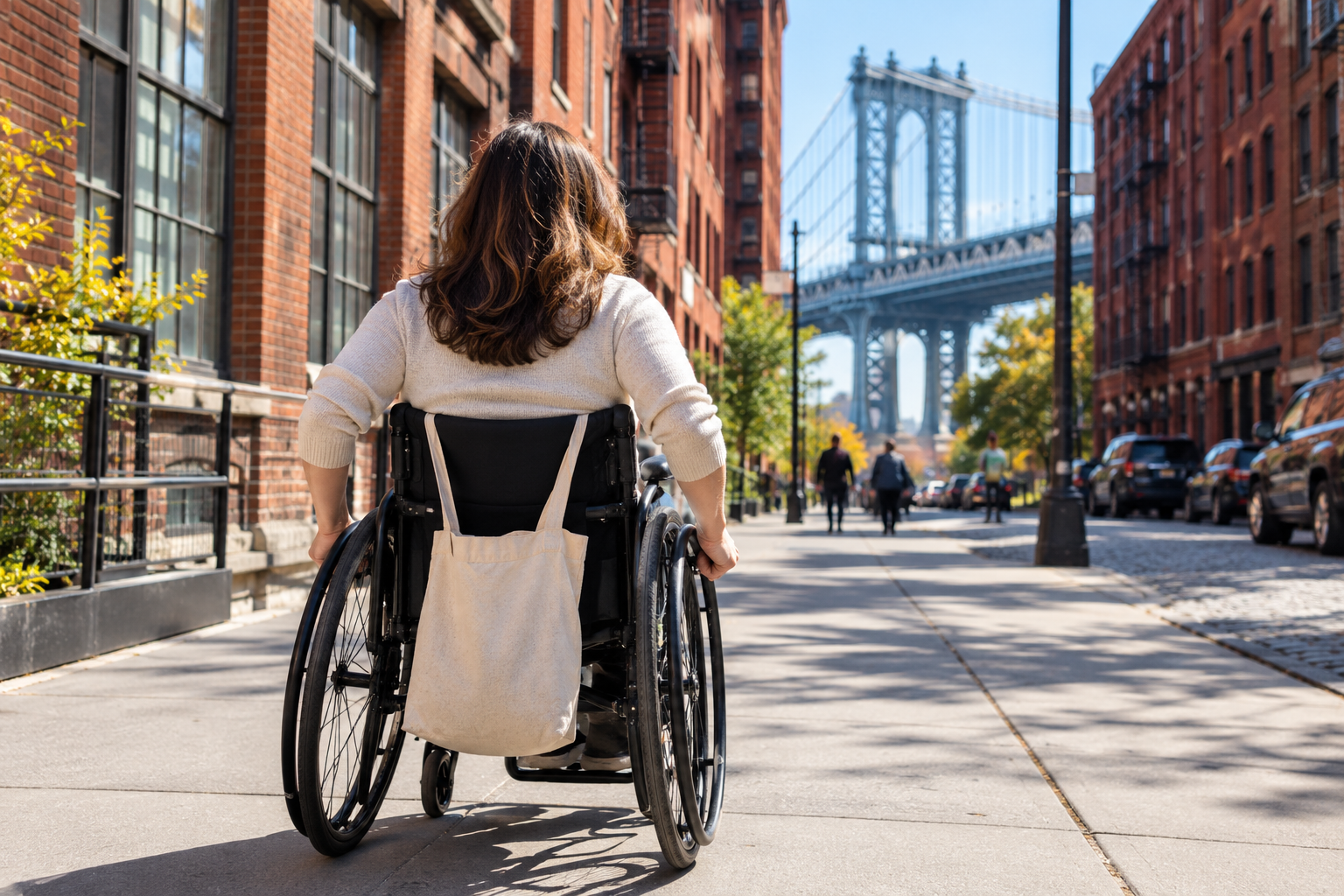
Wheelchair user rolling along a sunny Brooklyn sidewalk

The Barducci Law Firm, PLLC is at 5 West 19th Street in Manhattan. Ms. Barducci has filed ADA cases in New York’s federal courts for years. In an April 2025 decision, a federal judge in Brooklyn noted that she had filed nearly 300 ADA complaints in that court, and that they use “boiler plate language” that is “extremely similar” from case to case.

The plaintiffs in the complaints we read use wheelchairs and live in New York City, and the same names come back again and again. This year, Abeth Hashimi and Natosha Dunston are each the plaintiff in ten of her lawsuits. On September 2 and 3, 2026, Ms. Dunston filed five in the Brooklyn federal court in two days.

Some of the same plaintiffs also sue through other firms. Abeth Hashimi, for example, filed lawsuits through the Law Office of Jennifer Tucek in August 2026. If your papers came from that office, see what a Jennifer Tucek lawsuit means for your business. For why the same people and firms sue so many New York businesses, see is my ADA lawsuit a scam?

A long filing history doesn’t make your case go away. It can matter to your defense, as explained below.

What the complaint asks for, and why your landlord is in it

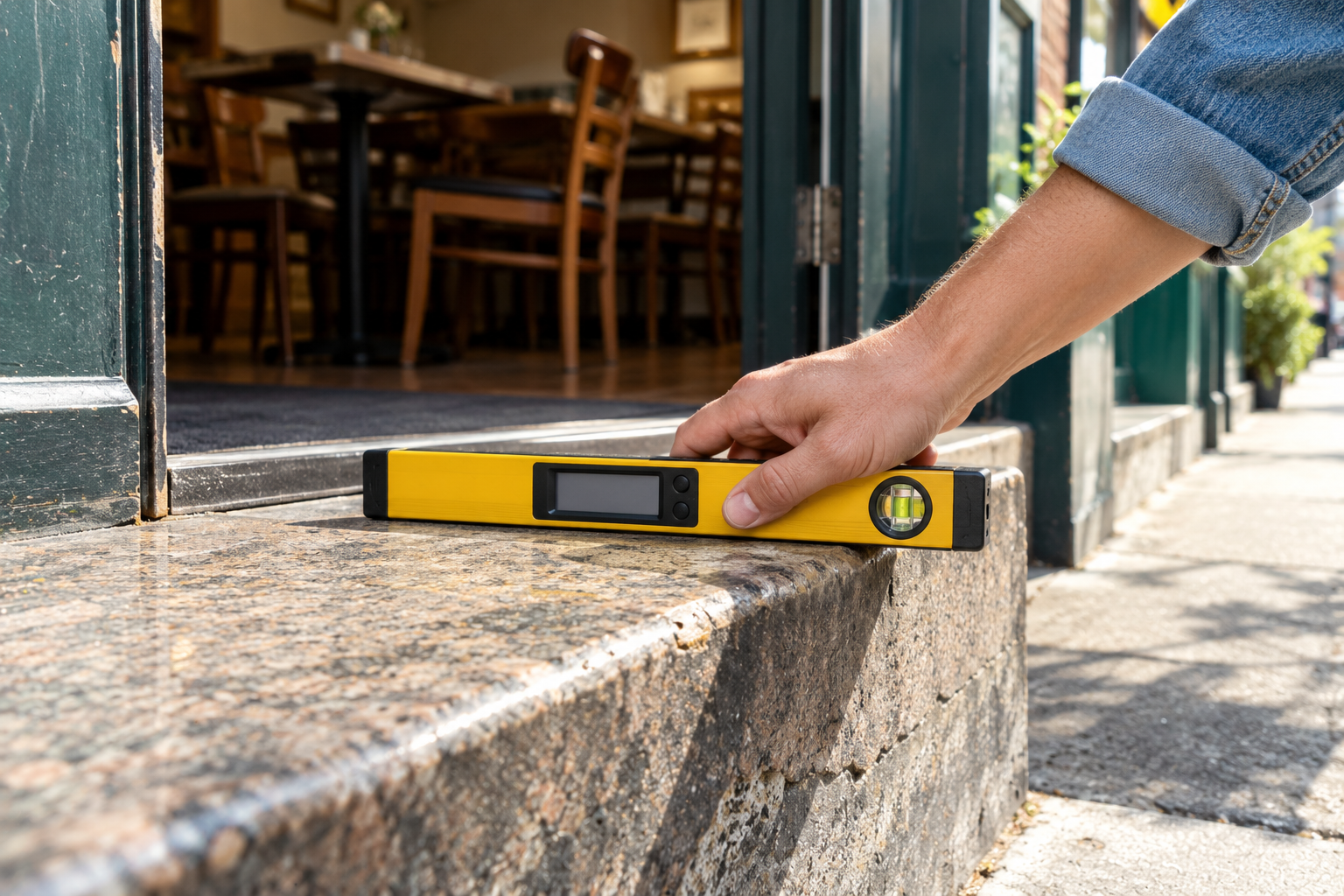
Inspector's digital level resting on a restaurant's front step

A renovation and fees, not damages. The four 2026 complaints from her office that we read each bring a single claim, under Title III of the federal ADA. They ask the court to order the barriers removed and the premises altered, to close the premises until the work is done, and to make the defendants pay the plaintiff’s attorney’s fees, expert fees, costs and litigation expenses. They don’t add the New York State or City Human Rights Law claims that bring requests for money damages in many other New York ADA cases.

Two defendants: the building and the business. Every complaint we read names the company that owns the building and the company that runs the restaurant or bar inside it. Under the federal ADA regulations, both the landlord and the tenant are responsible for access, and between the two of you, the lease can decide who is responsible for what. In one October complaint, the plaintiff identified the bar’s operator from its assumed-name filing with the New York Department of State and from its State Liquor Authority license, approved in January.

A long list, mostly from an inspection. That October complaint lists 20 barriers, from the front step and a locked second door to the height of the bar, the mirrors, the grab bars and a coat hook. The plaintiff says she ran into the entrance and the bar herself. The rest, the complaint says, comes from an inspection by an accessibility consultant hired for the plaintiff after her visit. A list like that is something to test with your own expert, item by item, not a to-do list to accept as written.

For a plain-English walk-through of your papers, see how to read an ADA lawsuit complaint, or upload the complaint to our free complaint checker for a one-page summary of who is suing, what they want and the date to plan around.

What happens if you don't respond

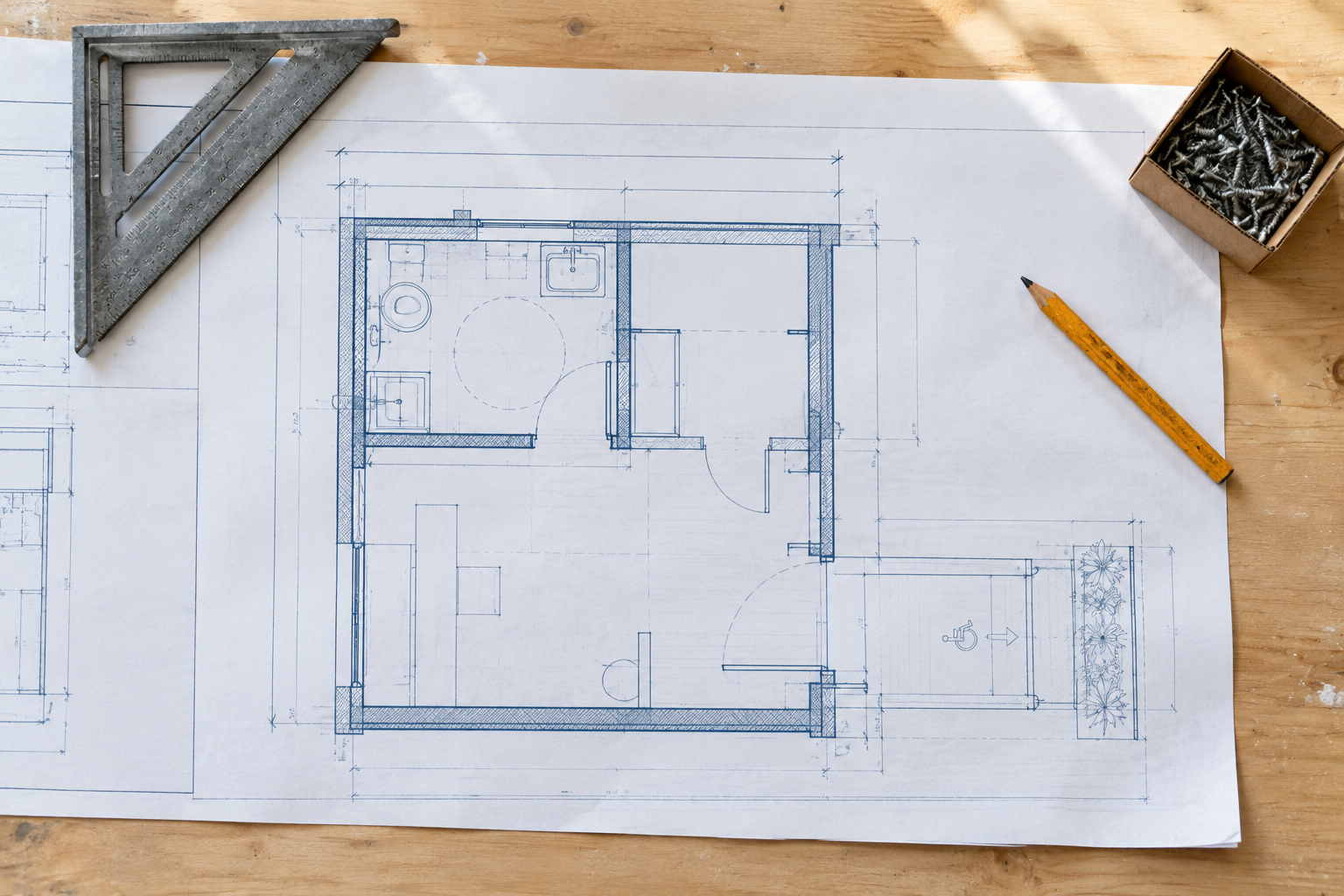
Architectural floor plans for a small restroom on a work table

Some owners assume a case like this goes away if they ignore it. The court records show otherwise. When a defendant doesn’t respond, her office asks the court for a default judgment, and judges have granted those requests. Here is what one Brooklyn federal judge ordered in 2025 against a pizzeria that never appeared:

  • Prepare architectural plans to fix the violations listed in the complaint, and give them to the plaintiff’s lawyer for review within 90 days.
  • The plaintiff can go back to the court for more within 30 days of getting the plans.
  • Finish the alterations within 60 days after the plaintiff agrees to them or the court rules the plans are adequate.

Then come the fees. In the default cases from her office that we reviewed, judges in Brooklyn and Manhattan awarded or recommended attorney’s fees of about $1,700 to about $5,800, plus costs and sometimes expert fees. Her office has asked for $525 an hour; judges in these cases allowed between $300 and $375. In one Brooklyn case, the request was $9,767.78 and the magistrate judge recommended $3,372 in fees and $405 in costs.

So the fee check is the smaller part. A default means renovating on a court’s schedule, with the plaintiff’s lawyer reviewing your plans, without ever raising the defenses in the next section, such as what is actually readily achievable for your building.

Your deadline. You generally have 21 days after you are served to answer or move to dismiss. If you signed and returned a request to waive formal service, you have 60 days from the date the request was sent. This week, write down the date you were served and keep every page, find your lease, tell your landlord or tenant, and tell your insurance carrier. Photograph the entrance, the bar, the tables and the restroom as they are today, and talk to a lawyer before any work starts. Don’t call the plaintiff’s lawyer yourself.

What can work in your defense

Hands fitting insulation covers on pipes under a restroom sink

Standing. A plaintiff has to plausibly show a real plan to come back to your business, not just to your neighborhood. In 2022 the Second Circuit, the federal appeals court that covers New York, raised that bar. In 2025, in one of her Brooklyn cases, a magistrate judge recommended denying a default judgment even though the defendants never appeared, because the plaintiff hadn’t plausibly alleged he would return. The judge noted that across his many complaints, he described passing the same list of at least sixteen restaurants around the city every week or two. Her newer complaints add more personal detail, such as a friend who lives nearby and a plan to return within six months, and a plaintiff can often fix a thin complaint by amending it. So standing is leverage that depends on your facts, not a guaranteed win.

In Martin v. Brooklyn Bagel & Coffee Co., a case we defended in Brooklyn federal court, the court dismissed an ADA class action for lack of standing. Our decisions are on the results page. Prior results do not guarantee a similar outcome.

What is readily achievable for your building. For an existing building, the ADA requires removing barriers only where that is “readily achievable,” which the law defines as easily accomplishable and able to be carried out without much difficulty or expense. The cost and the resources of the business count. The regulations also set an order of priority: first the entrance, then the areas where you serve customers, then the restrooms. Some fixes on these lists are cheap, such as insulating the pipes under a sink or lowering a paper towel shelf. Others, such as a ramp over a tall step on a narrow sidewalk, may not be readily achievable at all.

The 1991 safe harbor. Parts of a building that met the 1991 ADA standards and haven’t been altered since March 15, 2012 don’t have to be brought up to the 2010 standards. Her complaints say every barrier fails both sets of standards. That is something your own expert should check, item by item.

The lease. Who pays for what between landlord and tenant can matter as much as the defense itself. Read the repair, compliance with laws and indemnity clauses early.

Tax help for the work you do. If changes are needed, federal tax law helps pay for them. The Disabled Access Credit (IRS Form 8826) is 50% of eligible spending between $250 and $10,250 in a year, so up to $5,000, for a business with gross receipts of $1 million or less or no more than 30 full-time employees in the prior year. The credit doesn’t cover barrier removal in a building first put into service after November 5, 1990. Businesses can also deduct up to $15,000 a year for qualified barrier removal costs, and the IRS says the two can be used in the same year. Ask your accountant whether you qualify.

How The Samuel Law Firm can help

Michael Samuel

Michael Samuel has defended about 100 ADA cases since 2019, in the federal courts in Manhattan and Brooklyn and in New York state court, including a Barducci Law Firm case in Manhattan federal court, listed by docket number on our results page. Physical access cases are quoted after we review the complaint and the property.

When a Barducci complaint comes in, we check the service date, the plaintiff’s other lawsuits and what each one says about coming back, which items on the list are really required and readily achievable for your building, and what the lease says about who pays. If you’re the landlord or the tenant, we also look at what the other side owes you under the lease.

Frequently asked questions

Her cases are in federal court, so you generally have 21 days after you are served. If you signed and returned a waiver of service, you have 60 days from the date the waiver request was sent. Have a lawyer confirm the exact date right away.

The 2026 complaints from her office that we read ask for no money damages for the plaintiff. They ask for a court order to remove the barriers, plus the plaintiff’s attorney’s fees, expert fees and costs. You can be ordered to pay those fees if the plaintiff wins or you default.

Under the federal ADA regulations, both the landlord who owns the building and the tenant who runs the business are responsible for access. Between the two of you, the lease can decide who is responsible for what, so find it and read the repair, compliance and indemnity sections.

The plaintiff can ask the court for a default judgment. In defaults from her office, federal judges have ordered defendants to prepare architectural plans for the plaintiff’s lawyer to review within 90 days and to finish the work on a schedule, and have awarded the plaintiff’s attorney’s fees and costs. You also lose the chance to raise your defenses.

The complaints ask the court to close the premises until the work is done. In the default decisions from her office that we reviewed, the courts ordered plans and alterations on a schedule instead. Responding on time lets you argue over what work is actually required and when.

Yes. A small business may qualify for the federal Disabled Access Credit, which can be up to $5,000 a year, and businesses can deduct up to $15,000 a year for qualified barrier removal costs. The IRS says the two can be used in the same year. Ask your accountant whether you qualify.
Talk it through

Free consultation, flat fee quoted before you commit

I am Michael Samuel. I have practiced law in New York since 1993 and I have handled roughly a hundred ADA accessibility matters, most of them website cases, for the business on the receiving end. If a letter or a lawsuit about your website or your premises has arrived, the first call costs nothing and you will get a straight answer about where you stand. I handle website accessibility defense on a flat fee, quoted before you commit, so you know the number up front.

Recent decisions in these cases, with the courts and index numbers, are on my results page. Prior results do not guarantee a similar outcome. If you were sued over your premises by another firm we have written about, see what to know about The Weitz Law Firm and what to know about Jennifer Tucek lawsuits.

For a free consultation, call 212-563-9884, email michael@thesamuellawfirm.com, or use the contact form.

Attorney Advertising. This article is general information about New York law and is not legal advice about your situation. Reading it does not create an attorney client relationship.


The Samuel Law Firm

1441 Broadway, Suite 6085

New York, NY 10018

212-563-9884

Contact Us

Sued, owed wages, or injured? Talk to a New York litigator today.

The Samuel Law Firm is a litigation firm in Manhattan. Michael Samuel defends businesses in ADA lawsuits, website and premises, in wage and hour cases, and in contract and commercial disputes, and represents employees owed wages and people injured by negligence. He has practiced in New York since 1993 and appears in the Southern and Eastern Districts of New York and the New York state courts. Call 212-563-9884 for a free consultation; he answers directly