Why Does an ADA Website Lawsuit Ask for Money? New York State and City Claims Explained

The ADA pays no damages, so where does the money come from?

By Michael Samuel, ADA defense attorney in New York

Bike shop owner reading court papers at her counter in Park Slope

An ADA demand letter or lawsuit about your website almost always asks for money. That surprises people who look up the law, because the federal Americans with Disabilities Act doesn’t give a private plaintiff money damages against a business. Under Title III, a court can order the business to fix the problem and make it pay the plaintiff’s attorney’s fees. That is all the federal law provides.

The money comes from three New York laws that most New York complaints add after the ADA claim: the New York State Human Rights Law, the New York City Human Rights Law and the New York Civil Rights Law. They are what turn a fix-your-website case into a demand for payment.

My name is Michael Samuel. I’m an ADA defense attorney in New York, and I have defended about 100 ADA cases since 2019, most of them about websites. This article explains what each of those laws allows, what courts have actually awarded under them, and what reduces their value.

The most important fact first. These claims are part of the same lawsuit and share its deadline. In federal court you generally have 21 days from service to respond. In New York State court it is 20 days if you were handed the papers personally and 30 days if they were served another way.
The three New York laws in your complaint

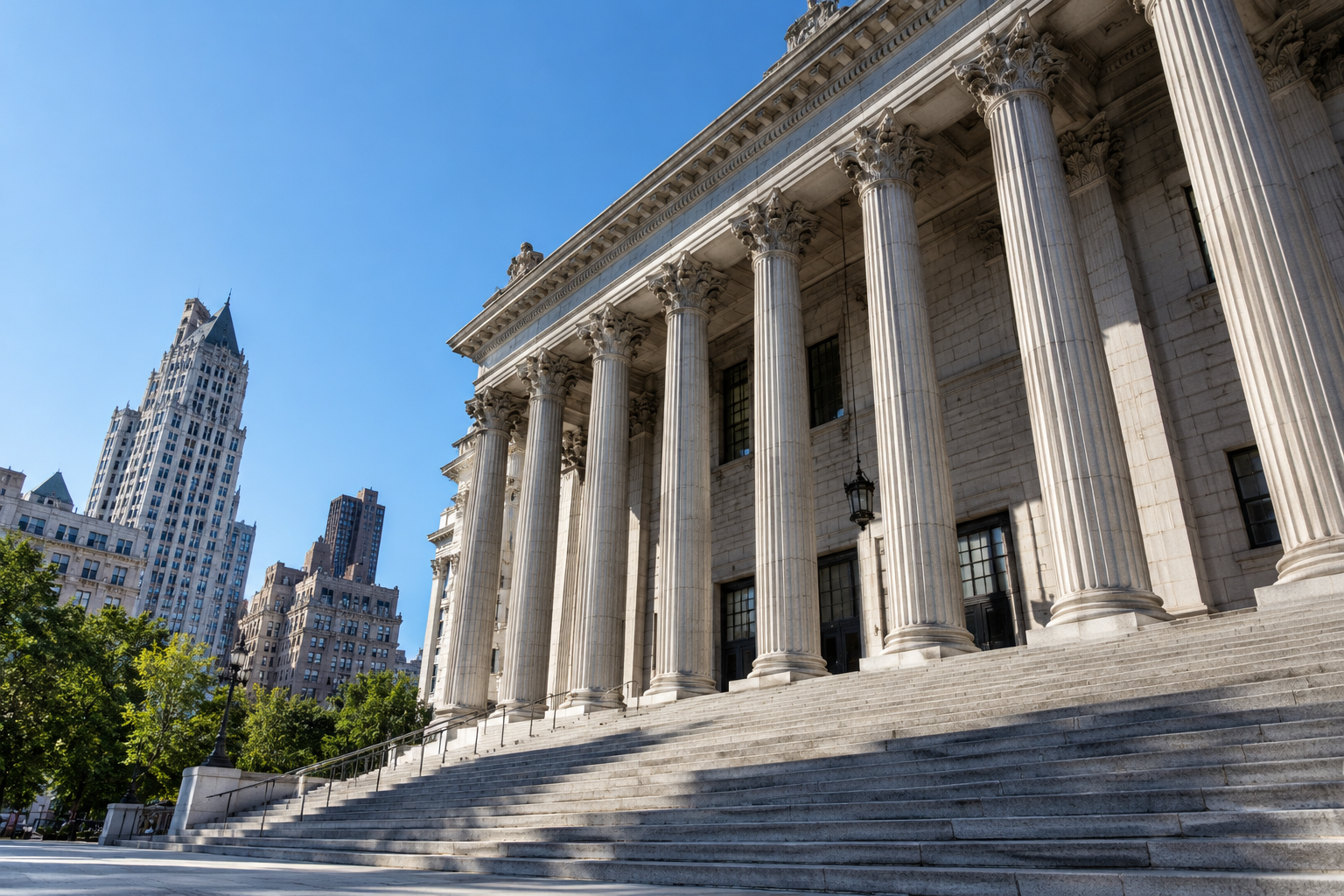
Columns of the New York County Courthouse at 60 Centre Street

The New York State Human Rights Law. It bars disability discrimination by places of public accommodation across the state. A plaintiff who wins can recover damages, including for emotional distress, and the court may award attorney’s fees. Punitive damages aren’t available under the state law for these claims. It allows them only in employment and housing cases.

The New York City Human Rights Law. It covers the same ground in the five boroughs, and its own text says it must be read broadly, whatever the state and federal laws say. It allows compensatory damages, punitive damages in the right case, and attorney’s fees. Two details make it the most expensive of the three. Fees are calculated at the hourly rates charged in Manhattan. And a plaintiff can be treated as the winner for fee purposes if the lawsuit prompted the business to make changes, even if the business made them voluntarily.

The New York Civil Rights Law, sections 40-c and 40-d. Section 40-c bars discrimination because of disability, and section 40-d lets the person affected recover a penalty of $100 to $500 for each violation. There is a condition: the plaintiff must serve notice on the New York Attorney General at or before the start of the case.

A complaint usually lists all three, plus the ADA claim. Each one has its own rules, which is why a defense that works against one claim doesn’t always end the others.

What courts actually award, and why demands are higher

Fingers reading a refreshable braille display beside a laptop keyboard

The figures in a demand letter are opening numbers. Court decisions show what these claims have been worth on their own when a business never responded at all and the plaintiff asked for a default judgment:

  • $1,500 and an order to fix the site. In 2023, a Brooklyn federal judge awarded the plaintiff in a website case $1,000 in compensatory damages under the state and city laws and $500 under the Civil Rights Law, and ordered the business to make its website accessible under WCAG 2.1, starting with a plan for the fixes within 60 days.
  • $1,000 under the city law, plus $500. In March 2025, a Brooklyn federal magistrate judge recommended the same amounts in another website case, noting that courts award $1,000 when the plaintiff hasn’t identified any particular harm.

Civil fines under the state and city laws, where they apply, are paid to the government, not to the plaintiff. Punitive damages under the city law take more than a violation: the plaintiff has to show something like a conscious disregard of other people’s rights.

So why are demands so much higher? Attorney’s fees. The ADA, the state law and the city law all let a winning plaintiff ask the court to make the business pay the plaintiff’s lawyers. Fees grow with every letter, motion and month, and under the city law they are measured at Manhattan rates. When the damages themselves come to $1,000 or $1,500, fees are most of what a business is asked to pay, which is why a prompt, well-documented response usually costs less than a slow one. For the full cost picture, see how much it costs to settle an ADA website case in New York.

Why fixing your website doesn't end the money claims

Accessibility tester checking a website with headphones and keyboard only

Fixing the site is the right thing to do, and it can end the federal ADA claim. Manhattan federal judges have dismissed website cases as moot where the fixes were complete and documented and the business committed to keeping the site accessible, as in Diaz v. Kroger (2019) and Jones v. Moscot (2026).

The state and city claims are different, because they ask for money for something that already happened, and a later fix doesn’t erase it. What usually happens in federal court is that once the federal claim is gone, the judge declines to decide the state or city claims that remain and dismisses them without prejudice, as the court did with the city law claim in Moscot. The plaintiff can then refile them in state court.

Fees work differently too. Under the federal law, a plaintiff whose claim ends because you fixed the site on your own generally can’t collect fees, because no court ruled in their favor. Under the city law, a plaintiff whose lawsuit prompted the change can be treated as the winner for fee purposes, even though you made the change voluntarily.

So the fix and the resolution of the money claims should be planned together. More on timing in should you fix your website before or after responding to an ADA lawsuit.

What can reduce or defeat the state and city claims

Three bound documents with red, white and blue-gray covers on a desk

No notice to the Attorney General. The Civil Rights Law claim requires notice to the Attorney General at or before the start of the case. In November 2025, a New York State appeals court affirmed the dismissal of a Civil Rights Law discrimination claim because the plaintiff hadn’t served that notice in time. Check whether your complaint says notice was served.

No standing in federal court. In Calcano v. Swarovski (2022), the Second Circuit, the federal appeals court that covers New York, upheld the dismissal of ADA cases whose claims about planning to return were boilerplate. When a federal court dismisses the ADA claim for that reason, it doesn’t keep the state and city claims either. They can sometimes be refiled in state court, so a dismissal is a strong result but not always the end.

The three-year limit. Claims under the state and city laws generally must be brought within three years. Older visits to the site may fall outside it.

A documented fix. It can end the federal claim, and it leaves much less to argue about on the others: no ongoing harm, a clear date the problems were fixed, and a smaller fee claim.

State court is a different arena. Some firms, such as KSS Law, file these cases in New York State Supreme Court instead of federal court, where the deadlines and procedure are different. See what to know if you were sued by KSS Law. For the full picture, see what is different about a website lawsuit in New York state court.

How The Samuel Law Firm can help

Michael Samuel has defended about 100 ADA cases since 2019, most of them about websites. He is admitted in New York and in the federal courts for the Southern and Eastern Districts of New York. For website cases, the firm charges a flat fee that covers all work up to trial, including a motion to dismiss.

We look at every claim in the complaint, not just the ADA claim: whether the plaintiff has standing, whether the Attorney General notice was served, what the dates allow, and how the fix and the resolution can be timed so the state and city claims and the fee claim are settled together.

For the website itself, we work with Codexyo, an independent web accessibility team that fixes sites like yours. They are not lawyers, and you’re free to use anyone.

Frequently asked questions

Not in a private lawsuit against a business under Title III. A court can order the business to fix the problem and pay the plaintiff’s attorney’s fees, but not damages. The money in New York demands comes from the New York State Human Rights Law, the New York City Human Rights Law and the New York Civil Rights Law, which most New York complaints add to the ADA claim.

In default cases, where the business never responded, Brooklyn federal judges have awarded or recommended $1,000 in compensatory damages under the state and city laws and $500 under the Civil Rights Law, plus an order to fix the website. Attorney’s fees are decided separately and are often the larger amount. Punitive damages under the city law require more than a violation, such as a conscious disregard of other people’s rights.

Not automatically. A documented fix can end the federal ADA claim, but the state and city claims ask for money for past harm. Federal judges often decline to decide them once the federal claim is gone, and the plaintiff can refile in state court. Under the city law, a plaintiff whose lawsuit prompted the fix can still be treated as the winner for attorney’s fees.

A plaintiff suing under New York Civil Rights Law sections 40-c and 40-d must serve notice on the New York Attorney General at or before the start of the case. The penalty under section 40-d is $100 to $500 for each violation. In November 2025, a New York appeals court affirmed the dismissal of such a claim because the notice wasn’t served in time.

Generally three years from the discriminatory act. Visits to a website more than three years before the case was filed may fall outside that limit. Confirm the dates in your complaint with a lawyer, because each claim has its own rules.

Mostly because of attorney’s fees. The ADA, the state law and the city law all let a winning plaintiff ask the court to make the business pay the plaintiff’s lawyers, and the city law measures fees at Manhattan rates. Fees grow the longer a case runs, which is why a prompt, documented response usually costs less.

Talk it through

Free consultation, flat fee quoted before you commit

I am Michael Samuel. I have practiced law in New York since 1993 and I have handled roughly a hundred ADA accessibility matters, most of them website cases, for the business on the receiving end. If a letter or a lawsuit about your website has arrived, the first call costs nothing and you will get a straight answer about where you stand. I handle website accessibility defense on a flat fee, quoted before you commit, so you know the number up front.

Recent decisions in these cases, with the courts and index numbers, are on my results page. Prior results do not guarantee a similar outcome. If your letter came from a firm we have written about, see what to know about Equal Access Law Group letters and what to know about Apex Trial Law letters.

For a free consultation, call 212-563-9884, email michael@thesamuellawfirm.com, or use the contact form.

Attorney Advertising. This article is general information about New York law and is not legal advice about your situation. Reading it does not create an attorney client relationship.


The Samuel Law Firm

1441 Broadway, Suite 6085

New York, NY 10018

212-563-9884

Contact Us

Sued, owed wages, or injured? Talk to a New York litigator today.

The Samuel Law Firm is a litigation firm in Manhattan. Michael Samuel defends businesses in ADA lawsuits, website and premises, in wage and hour cases, and in contract and commercial disputes, and represents employees owed wages and people injured by negligence. He has practiced in New York since 1993 and appears in the Southern and Eastern Districts of New York and the New York state courts. Call 212-563-9884 for a free consultation; he answers directly