Sued Under the ADA With Your Landlord or Tenant? Who Is Responsible in New York

Both of you can be sued, and the lease decides who pays

By Michael Samuel, ADA defense attorney in New York

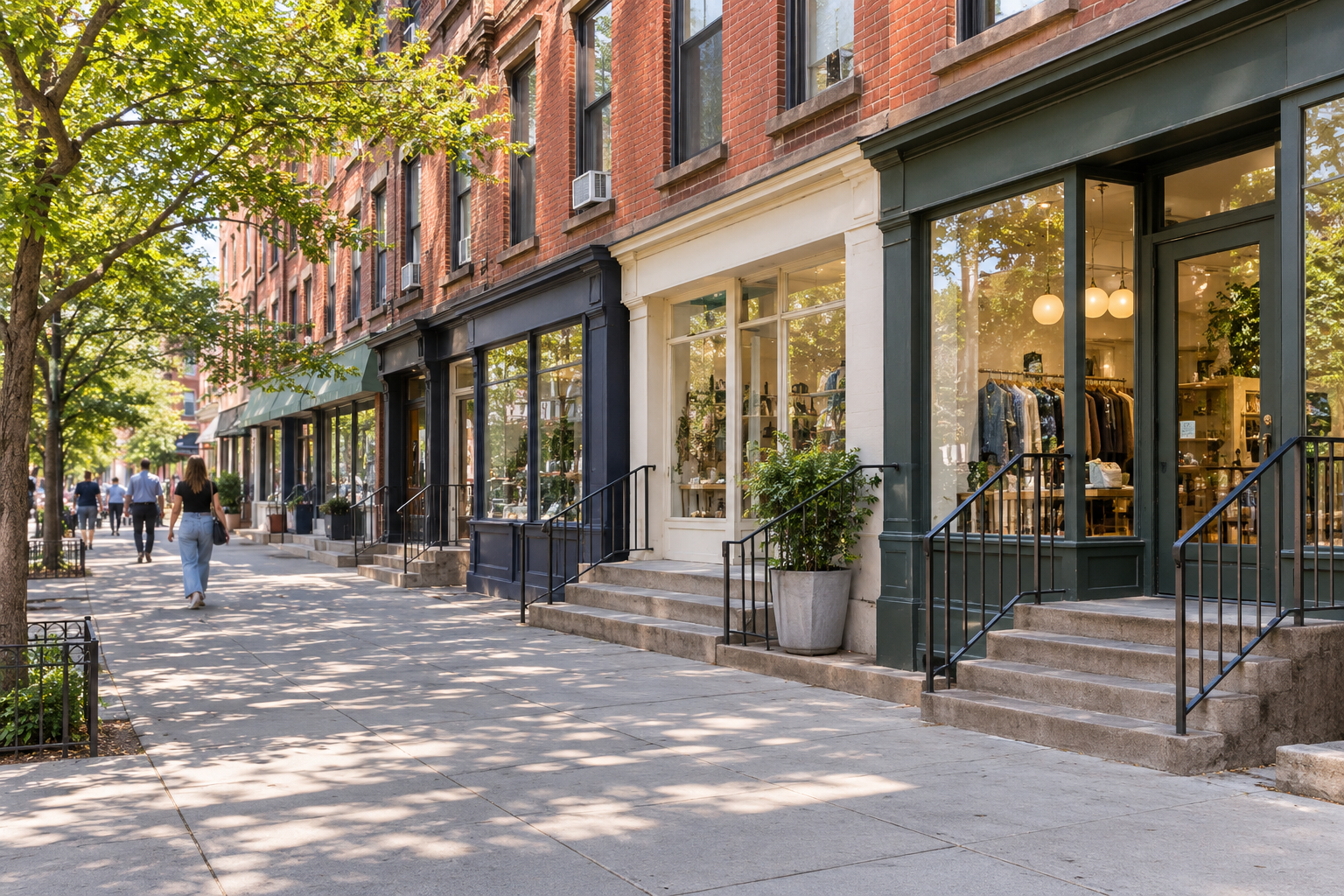
Row of Brooklyn shopfronts with steps up to each entrance

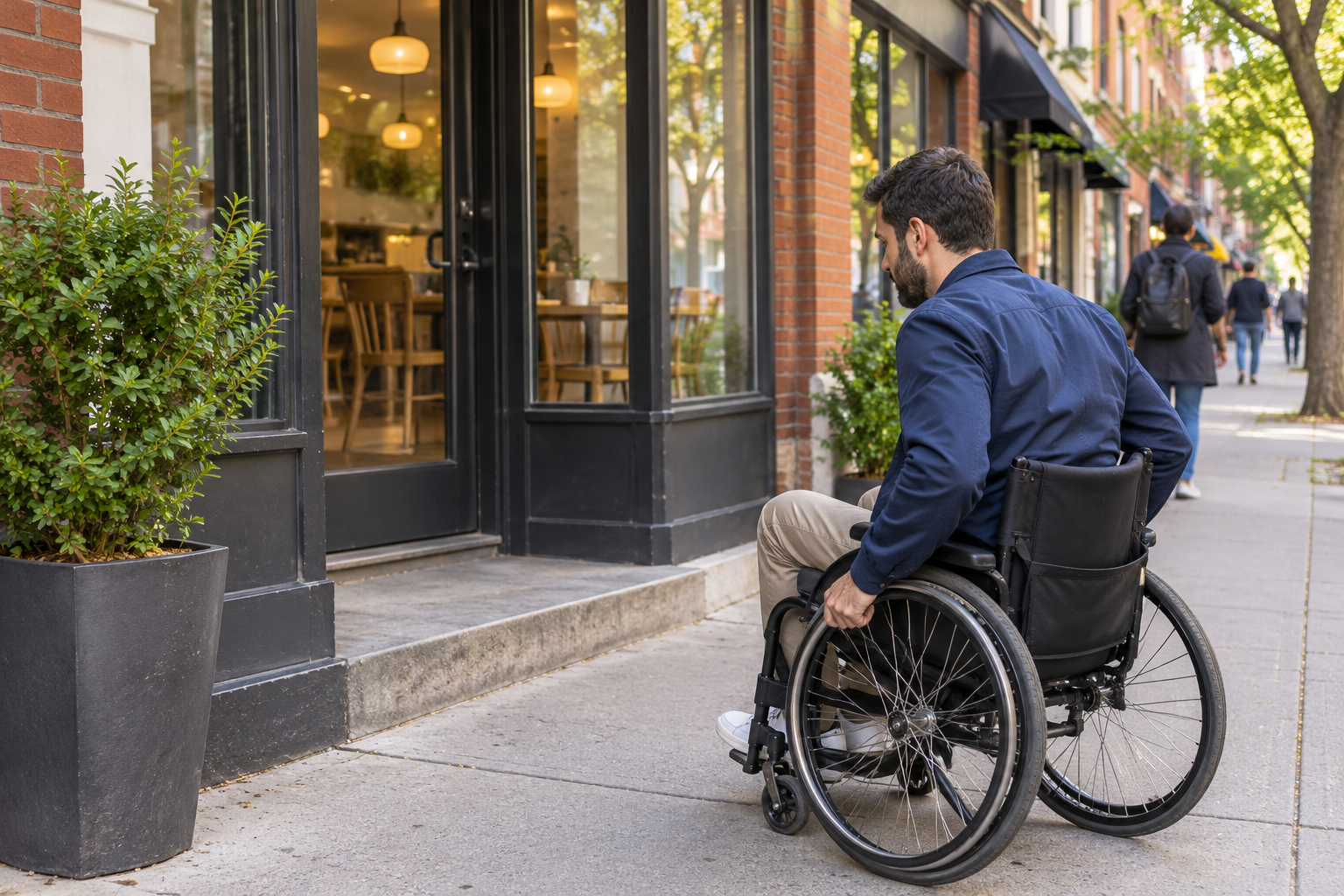
Most ADA lawsuits about a physical place in New York, a step at the door, a narrow aisle, a restroom a wheelchair can’t use, name two defendants: the business that operates the space and the company that owns the building. If you are one of them, the other one is probably in the case too, even if you have never spoken about accessibility.

My name is Michael Samuel. I am an ADA defense attorney in New York, admitted in 1993, and I have defended about 100 ADA cases since 2019, including physical access cases against stores, restaurants and the companies that own their buildings. This article explains who is responsible to the person suing, who pays between landlord and tenant, and how to keep that question from making the case more expensive.

The short answer. To the plaintiff, the landlord and the tenant are each responsible for access. Between the two of you, the lease decides who pays and who does the work. Those are two different questions, and mixing them up is one of the most common and costly mistakes in these cases.

What the law says, in plain words

Wheelchair user on a sidewalk facing a cafe step

The federal law. Title III of the Americans with Disabilities Act applies to “any person who owns, leases (or leases to), or operates a place of public accommodation.” Owning the building is enough to be covered, and so is running the business inside it.

The federal regulation. The Justice Department’s rule is direct: “Both the landlord who owns the building that houses a place of public accommodation and the tenant who owns or operates the place of public accommodation are public accommodations subject to the requirements of this part. As between the parties, allocation of responsibility for complying with the obligations of this part may be determined by lease or other contract.”

The key words are “as between the parties.” The Justice Department’s Title III Technical Assistance Manual gives the example of a shopping center that makes a boutique responsible for barrier removal in its lease. If the boutique doesn’t do the work, both the landlord and the boutique can be sued by a customer, and the landlord’s protection is to make the tenant indemnify it under the lease. In 2000, in Botosan v. Paul McNally Realty, a federal appeals court relied on that guidance and rejected a landlord’s argument that its lease had shifted all ADA responsibility to the tenant.

The New York claims. These lawsuits usually add claims under the New York State and New York City Human Rights Laws, which is where money damages come from. Both reach owners and lessees too. The state law covers the “owner, lessee, proprietor, manager, superintendent, agent or employee” of a place of public accommodation, and the city law adds lessors, franchisors and franchisees. Many complaints ask for judgment against both defendants “jointly and severally,” meaning either one can be made to pay the whole amount. See why an ADA lawsuit asks for money under state and city law.

What your lease probably says

Commercial lease, storefront keys and glasses on a desk

Commercial leases in New York rarely mention the ADA by name, but several common clauses decide the question:

  • Compliance with laws. Many leases make the tenant responsible for changes inside the premises required by any law, and the landlord responsible for the structure, the facade and the common areas. Some put everything on the tenant.
  • Alterations. Most leases require the landlord’s written consent before the tenant changes the entrance, the storefront or anything structural. A tenant who is responsible for a ramp may still need the landlord’s permission to build it.
  • Repairs. Who maintains the sidewalk, the steps and the doors.
  • Indemnity. Whether one side must cover the other’s losses, legal fees included, from a claim like this one.
  • Insurance. Many leases require the tenant’s liability policy to name the landlord as an additional insured. Whether a policy covers an ADA claim depends on its wording, but report the lawsuit to your carrier promptly either way.

The lease can outlast the lawsuit. A 2011 decision from New York’s Appellate Term shows how far this can go. In Brooks Shopping Centers v. DCHWWC Restaurant, the owner of a Yonkers shopping center had settled an ADA case with a consent decree requiring access fixes across the center. It then started eviction proceedings against a restaurant tenant for not making the required changes inside its space, relying on the lease clause requiring the tenant to make modifications required “by any law.” The tenant argued that its lease was signed before the ADA existed and that the work would cost more than $500,000. The trial court sided with the tenant, but the appellate court reversed: the lease bound the tenant, and the question was what was readily achievable for the tenant, not all or nothing. It sent the case back for a new trial on that issue.

So read the lease before you write to the other side about who is responsible, and before you sign anything with them.

Who can actually fix what

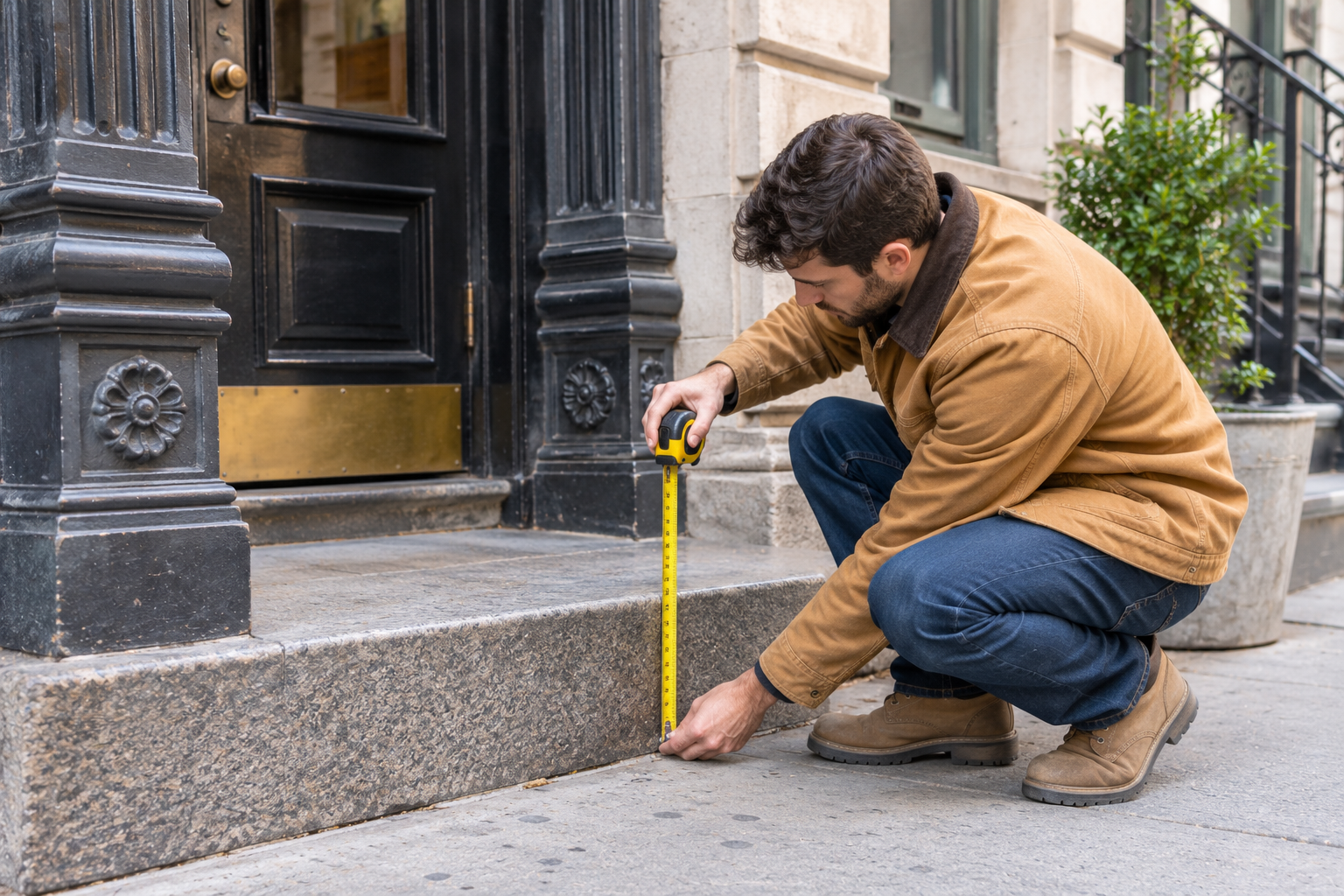
Contractor measuring the height of a stone entrance step

What the law requires of an older building. For an existing building that hasn’t been altered, the ADA requires removing barriers where that is “readily achievable,” meaning easily accomplishable and able to be carried out without much difficulty or expense. In the Second Circuit, the plaintiff has to propose a plausible fix whose costs don’t clearly exceed its benefits, and then the defendant has to prove that the costs would in fact exceed the benefits (Roberts v. Royal Atlantic Corp., 2008). Spaces that were renovated face a stricter standard for the altered areas.

Who controls the work. The tenant usually controls the counter, the aisles, the seating and the inside of the restroom. The entrance, the facade, the sidewalk and the building’s structure usually belong to the landlord, and changing them can require permits from the Department of Buildings and, in a historic district, the Landmarks Preservation Commission. A 2014 Manhattan federal decision, Gropper v. Fine Arts Housing, describes how a well-known Tribeca restaurant promised the Justice Department in 2013 to install a permanent ramp at its alternate entrance, and to use its best efforts to get approvals from the Department of Buildings, the Landmarks Preservation Commission and its landlord, with the work to start within three months after those approvals.

That is why a fix list that one defendant can’t carry out alone is a common problem in these cases, and why the landlord and tenant need to agree on who does what before either one promises a plaintiff a date.

Tax help for the work. A business with no more than $1 million in gross receipts or no more than 30 full-time employees in the prior year may be able to claim a federal tax credit of 50% of eligible access spending between $250 and $10,250 a year, up to $5,000. A separate federal deduction of up to $15,000 a year is available for qualifying barrier removal. The same dollars can’t be counted for both, so ask your accountant which applies to whoever pays for the work.

How to handle the case together

Landlord and shop owner reviewing a floor plan together

Tell the other side right away. If the complaint names only you, send it to your landlord or tenant anyway, along with your insurance carrier. If you both are named, each of you has your own deadline: in federal court, generally 21 days after you are served, or 60 days from when a waiver of service request was sent if you signed and returned it.

Don’t let one side default. When a defendant doesn’t respond, the court can order the work on its own schedule. In a 2021 Manhattan case described in our guide to Marks Law Firm lawsuits, a default judgment ordered a store and its landlord to put in a ramp or another accessible entrance within 60 days and to pay the plaintiff damages. A default by one defendant leaves the other defending the case alone.

Decide early whether to defend together. When interests line up, a joint defense or one lead lawyer keeps costs down. When the lease is in dispute, each side usually needs its own lawyer, and claims against each other, called cross-claims, add cost. Many landlords and tenants agree early to defend the plaintiff’s claim together and settle the lease question between themselves afterward.

Make the settlement something both of you can perform. If the fix touches the entrance or the facade, the landlord’s consent and the permits have to be built into the schedule. A settlement that sets dates for work only one defendant controls invites a second dispute.

Know your plaintiff. The firms filing these cases in New York, such as Barducci Law Firm, Hanski Partners and The Parker Law Group, Jennifer Tucek, The Weitz Law Firm and Gabriel A. Levy, each have their own patterns. Our ADA lawsuit tracker lists their New York cases, updated daily from the court records.

How The Samuel Law Firm can help

Michael Samuel

Michael Samuel has defended about 100 ADA cases since 2019, in the federal courts in Manhattan and Brooklyn and in New York state court, including physical access cases against stores, restaurants and the companies that own their buildings. Physical access cases are quoted after we review the complaint and the property.

When a premises complaint comes in, we check the service date for each defendant, read the lease for who is responsible for what, sort the complaint’s list into what is really required and readily achievable for your building, and work out what the state and city damages claims are worth. If you’re the landlord or the tenant, we also look at what the other side owes you under the lease, and whether a joint defense makes sense.

Call (212) 563-9884 before your answer deadline, or upload the complaint to our free complaint checker for a plain-English summary first. Restaurant owners can also see what to know when a restaurant is sued under the ADA.

Frequently asked questions

Both. Under the federal ADA rules, the landlord who owns the building and the tenant who operates the business are each responsible for access, and a plaintiff can sue either or both. The lease can decide who pays and who does the work, but only between the landlord and the tenant.

A lease can make the tenant responsible to the landlord, for example through a compliance with laws clause and an indemnity. It does not stop the plaintiff from suing the landlord. The Justice Department’s guidance and federal court decisions say the landlord stays responsible to the public whatever the lease says.

Because the ADA covers anyone who owns, leases or operates a place of public accommodation, plaintiffs usually name both the business and the building owner. New York State and City law also reach owners and lessees. Tell your landlord, read the lease, and report the lawsuit to your insurance carrier.

That depends on the lease and on what is readily achievable for the building. The entrance and the sidewalk are usually controlled by the landlord, and work there can need city permits and, in a historic district, Landmarks approval. The lease’s compliance with laws, alterations and indemnity clauses usually decide who bears the cost.

Usually yes for anything structural, such as the entrance, the storefront or walls, because most commercial leases require the landlord’s written consent for alterations. Changes such as moving displays, lowering a counter section or rearranging seating often don’t, but check your lease first.

Yes. An eligible small business can claim a federal credit of 50% of eligible access spending between $250 and $10,250 a year, and a separate deduction of up to $15,000 a year is available for qualifying barrier removal. The same spending can’t be used for both, so ask your accountant.

Talk it through

Free consultation, fees quoted before you commit

I am Michael Samuel. I have practiced law in New York since 1993 and I have handled roughly a hundred ADA accessibility matters for the business on the receiving end, including physical access cases against stores, restaurants and the companies that own their buildings. If a letter or a lawsuit about your premises has arrived, the first call costs nothing and you will get a straight answer about where you stand. Physical access cases are quoted after we review the complaint and the property, before you commit.

Recent decisions in these cases, with the courts and index numbers, are on my results page. Prior results do not guarantee a similar outcome. If you were sued over your premises by a firm we have written about, see what to know about Barducci Law Firm lawsuits and what to know about Marks Law Firm lawsuits.

For a free consultation, call 212-563-9884, email michael@thesamuellawfirm.com, or use the contact form.

Attorney Advertising. This article is general information about New York law and is not legal advice about your situation. Reading it does not create an attorney client relationship.


The Samuel Law Firm

1441 Broadway, Suite 6085

New York, NY 10018

212-563-9884

Contact Us

Sued, owed wages, or injured? Talk to a New York litigator today.

The Samuel Law Firm is a litigation firm in Manhattan. Michael Samuel defends businesses in ADA lawsuits, website and premises, in wage and hour cases, and in contract and commercial disputes, and represents employees owed wages and people injured by negligence. He has practiced in New York since 1993 and appears in the Southern and Eastern Districts of New York and the New York state courts. Call 212-563-9884 for a free consultation; he answers directly