ADA Demand Letter From a Firm You’ve Never Heard Of? How to Check If It’s Real

Check it before you pay, call or ignore it

By Michael Samuel, ADA defense attorney in New York

Frame shop owner unlocking her Brooklyn storefront with the morning mail

An ADA demand letter says your website doesn’t work for blind or low-vision users and asks you to pay and fix it, usually by a short deadline. When it comes from a law firm you’ve never heard of, the first question is fair: is this even real?

It’s a question we hear often. This month a business owner sent my office a letter from a firm we had never heard of, despite tracking these cases every day. Its website listed no lawyer credentials, its phone number had an out-of-state area code, and the letter named no dollar amount, only a five-day deadline to “settle.”

My name is Michael Samuel. I’m an ADA defense attorney in New York, and I have defended about 100 ADA cases since 2019, most of them about websites. Some letters from unfamiliar firms are real, some are not, and a few minutes of checking usually tells you which. This article shows you how. Whatever you find, don’t pay, don’t call the number in the letter, and don’t ignore it until you know.

What a real ADA demand letter usually looks like

Stapled letter beside printed web page screenshots marked with red circles

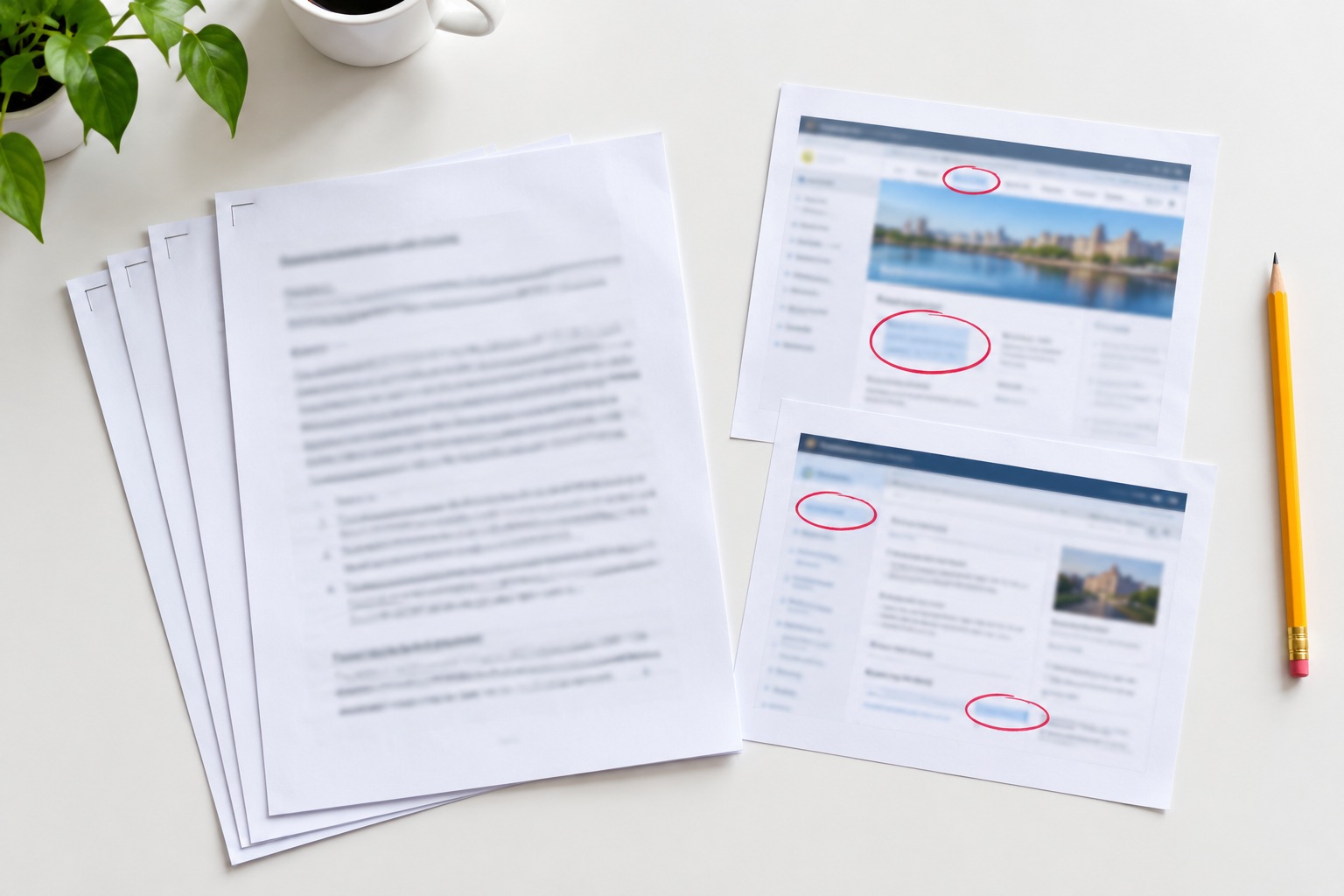
A real demand letter comes from a lawyer who can be identified, on behalf of a client who says they could not use your website. It usually:

  • Names the law firm and the lawyer who signed it, with a real office address and phone number.
  • Says who the client is, or describes them, typically a blind or low-vision person who uses a screen reader.
  • Lists specific problems on your website, often with screenshots or the results of an automated scan.
  • Cites the ADA and, in New York, the state and city human rights laws, and asks you to fix the site and pay money, often a specific amount.
  • Gives a deadline to respond before the firm says it will file a lawsuit.

Not every real firm files lawsuits in New York. Some mainly send letters. We have written about two of them, Equal Access Law Group and Apex Trial Law. So a firm you can’t find in New York court records may still be real.

Warning signs of a fake or improper letter

Blank gift cards fanned beside a phone showing a payment code

No single sign proves a letter is fake. Real firms use short deadlines and automated scans too. But these are the signs that should make you stop and check before doing anything else:

No identifiable lawyer. The letter is unsigned, signed only with a first name, or signed by someone you can’t find in any state’s lawyer records. The firm’s website lists lawyers with no bar admissions or law schools.

Details that don’t add up. A New York office with a phone number from another state, an address that doesn’t exist, or a firm website that says nothing about the kind of claim the letter makes.

Unusual ways to pay. A request to pay by gift card, cryptocurrency, wire transfer to a personal account or a payment app is a serious warning sign. The Federal Trade Commission says no legitimate business will insist on payment by gift card, and that anyone requiring payment in cryptocurrency is probably a scammer.

Threats of arrest or criminal charges. An ADA website claim is a civil matter. New York’s ethics rules bar a lawyer from threatening criminal charges solely to gain an advantage in a civil case, so a letter that does is improper even if the sender turns out to be real.

Pressure to call right away. “Call within 48 hours to settle,” with no dollar figure, is designed to get you on the phone, where whatever you say can be used against you. Pressure alone doesn’t make a letter fake, but it is a reason to let a lawyer make the call.

How to check the sender in ten minutes

Business owner looking up a lawyer's name on a laptop in a bright office
  1. Look up the lawyer. Every lawyer admitted in New York must register with the state’s court system every two years, and the courts publish a free Attorney Search where anyone can look up a lawyer by name and see their registration status. If the letter says the lawyer is admitted in another state, check that state’s bar or court lookup instead.
  2. Check the firm against the letter. Does the address on the letter match the firm’s website and its public listings? Does the phone number belong to the firm? Is the person who signed the letter named on the firm’s site?
  3. Look for a lawsuit. If the letter says a case has been filed, look it up: PACER for federal court, NYSCEF for New York State Supreme Court. A real lawsuit has a court and a case or index number. If nothing has been filed, you have a letter, not a lawsuit.
  4. Check the claims against your site. Are the problems in the letter actually on your website? Even a fake letter can point at real barriers, and real barriers are what the next, real letter will be about.

Our free complaint checker also reads demand letters. Upload yours for a plain-English summary of who sent it, what it claims and what it asks for.

What to do next, whether it's real or fake

Business owner and lawyer reviewing a letter together at a bright table

Don’t pay and don’t call. Paying a fake demand loses the money. Paying a real one without a written settlement doesn’t end the claim. Calling the number in the letter, real or not, gives the sender information about your business.

Have a lawyer respond. A short letter from your lawyer asking for the sender’s bar admission, the client’s identity and the specific barriers claimed sorts out most of these quickly. A real firm can answer those questions easily.

If it’s real, treat it as the start of a claim. Read what to do in the first 48 hours after an ADA demand letter, and see what these cases usually cost to resolve.

If it’s fake, report it. Under New York law the Attorney General can bring an action against anyone practicing law without a license, and you can also report the scam to the Federal Trade Commission at ReportFraud.ftc.gov. Then check your website anyway: the barriers in the letter may still be real.

How The Samuel Law Firm can help

Michael Samuel has defended about 100 ADA cases since 2019, most of them about websites. We track new ADA filings and the firms that send these letters, so we can usually tell you quickly who is behind a letter and how they operate.

Send us the letter and we’ll check the sender, tell you whether it’s real, and if it is, what a realistic resolution looks like and what it would cost. The fee is quoted up front, before you commit.

For the website itself, we work with Codexyo, an independent web accessibility team that fixes sites like yours. They are not lawyers, and you’re free to use anyone.

Frequently asked questions

Some are, and some come from real firms you’ve simply never heard of. Check the lawyer’s registration and the firm’s details before you pay, call or ignore the letter. A real letter is the start of a claim, so it shouldn’t be ignored either.

New York’s court system publishes a free Attorney Search where you can look up any lawyer admitted in New York by name and see their registration status. If the letter says the lawyer is admitted elsewhere, use that state’s bar or court lookup.

Not on its own. Some real firms mainly send demand letters and rarely sue in New York. Look at the whole picture: whether the lawyer is registered, whether the firm’s details match the letter, and how it asks to be paid.

No. Whether the letter is real or not, what you say on that call can be used against you, and a fake sender can use it to pressure you. Let a lawyer make the first contact and ask for the sender’s bar admission and the specific claims.

Don’t pay or respond to the sender. Report it to the New York Attorney General and to the Federal Trade Commission at ReportFraud.ftc.gov. Then check your website anyway, because the barriers the letter describes may still be real.

Talk it through

Free consultation, flat fee quoted before you commit

I am Michael Samuel. I have practiced law in New York since 1993 and I have handled roughly a hundred ADA accessibility matters, most of them website cases, for the business on the receiving end. If a letter or a lawsuit about your website has arrived, the first call costs nothing and you will get a straight answer about where you stand. I handle website accessibility defense on a flat fee, quoted before you commit, so you know the number up front.

Recent decisions in these cases, with the courts and index numbers, are on my results page. Prior results do not guarantee a similar outcome. If your letter came from a firm we have written about, see what to know about Equal Access Law Group letters and what to know about Apex Trial Law letters.

For a free consultation, call 212-563-9884, email michael@thesamuellawfirm.com, or use the contact form.

Attorney Advertising. This article is general information about New York law and is not legal advice about your situation. Reading it does not create an attorney client relationship.


The Samuel Law Firm

1441 Broadway, Suite 6085

New York, NY 10018

212-563-9884

Contact Us

Sued, owed wages, or injured? Talk to a New York litigator today.

The Samuel Law Firm is a litigation firm in Manhattan. Michael Samuel defends businesses in ADA lawsuits, website and premises, in wage and hour cases, and in contract and commercial disputes, and represents employees owed wages and people injured by negligence. He has practiced in New York since 1993 and appears in the Southern and Eastern Districts of New York and the New York state courts. Call 212-563-9884 for a free consultation; he answers directly