Sued by Jennifer Tucek? What a New York Business Owner Needs to Know

Your 21 day deadline, what the court records show, and what a defense looks like

By Michael Samuel, ADA defense attorney in New York

Federal courthouse in Brooklyn seen across Cadman Plaza on a sunny day

If you just received a summons and complaint signed by Jennifer E. Tucek of the Law Office of Jennifer Tucek, PC, you are not alone. Court records show at least 36 ADA lawsuits filed by her office in the federal courts in Manhattan and Brooklyn between April 19 and October 8, 2026, about six a month, and new ones are still being filed.

My name is Michael Samuel. I am an ADA defense attorney in New York, admitted in 1993, and I have defended about 100 ADA cases since 2019, including physical access cases as well as website cases. This article explains who filed your lawsuit, what it asks for, what your deadline is, and what a defense realistically looks like.

The most important fact first. These cases are in federal court. You generally have 21 days to respond after you are served, so the date you were served matters more than the date you opened the envelope. And if you own the building rather than the business inside it, read on, because many of these lawsuits name the landlord too.

Two kinds of lawsuits from one office

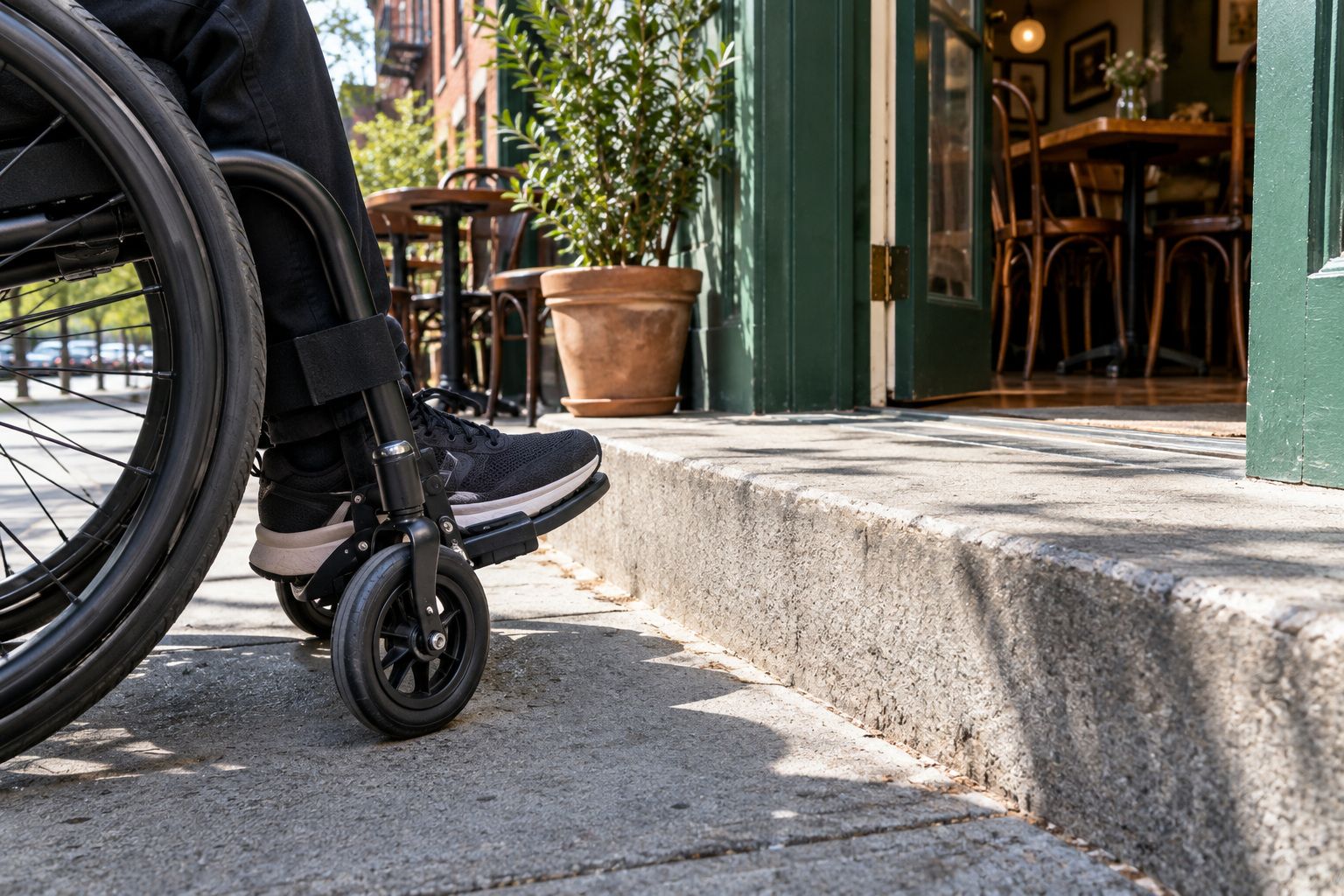
Wheelchair stopped at a single stone step into a restaurant

Physical access cases. Most of her cases are about buildings: restaurants, bars, cafés and shops. In one July complaint, for example, a plaintiff who uses a wheelchair described a visit to a Midtown restaurant and listed inaccessible counters, bars and tables and an inaccessible restroom. At least 22 of her lawsuits name both the business and the company that owns the building. The same plaintiffs appear again and again; one of them, Carlos Ruiz Florez, is the plaintiff in at least seven.

Website cases. Since late July, her office has also filed website accessibility cases for blind plaintiffs who use screen readers. Those complaints say, in nearly the same words each time, that the website “is not a standalone digital platform” and is tied to the business’s physical store. That sentence is there for a reason: some New York federal judges have ruled the ADA doesn’t cover a business that exists only online. See can an online-only business be sued under the ADA.

What the complaint asks for, and why your landlord may be in it

Brick walk-up building with a small café on the ground floor

In a physical access case, the federal ADA claim asks the court to order the barriers removed, plus the plaintiff’s attorney’s fees, expert fees and costs. The ADA doesn’t give the plaintiff money damages, but the fees can add up, and they grow the longer a case runs.

In a website case, the complaint adds claims under the New York State and New York City Human Rights Laws to the ADA claim. Those state and city claims are where requests for money damages come from.

If you own the building, you can be named too. Under the federal ADA regulations, both the landlord who owns the building and the tenant who runs the business are responsible for access. Between the two of you, the lease can decide who is responsible for what. Find your lease now and read the parts on repairs, compliance with laws and indemnity, because it may say which of you has to fix the barriers and defend the case.

For a plain-English walk-through of what’s in your papers, see how to read an ADA lawsuit complaint, or upload the complaint to our free complaint checker for a one-page summary of who is suing, what they want and the date to plan around.

Your deadline and your first week

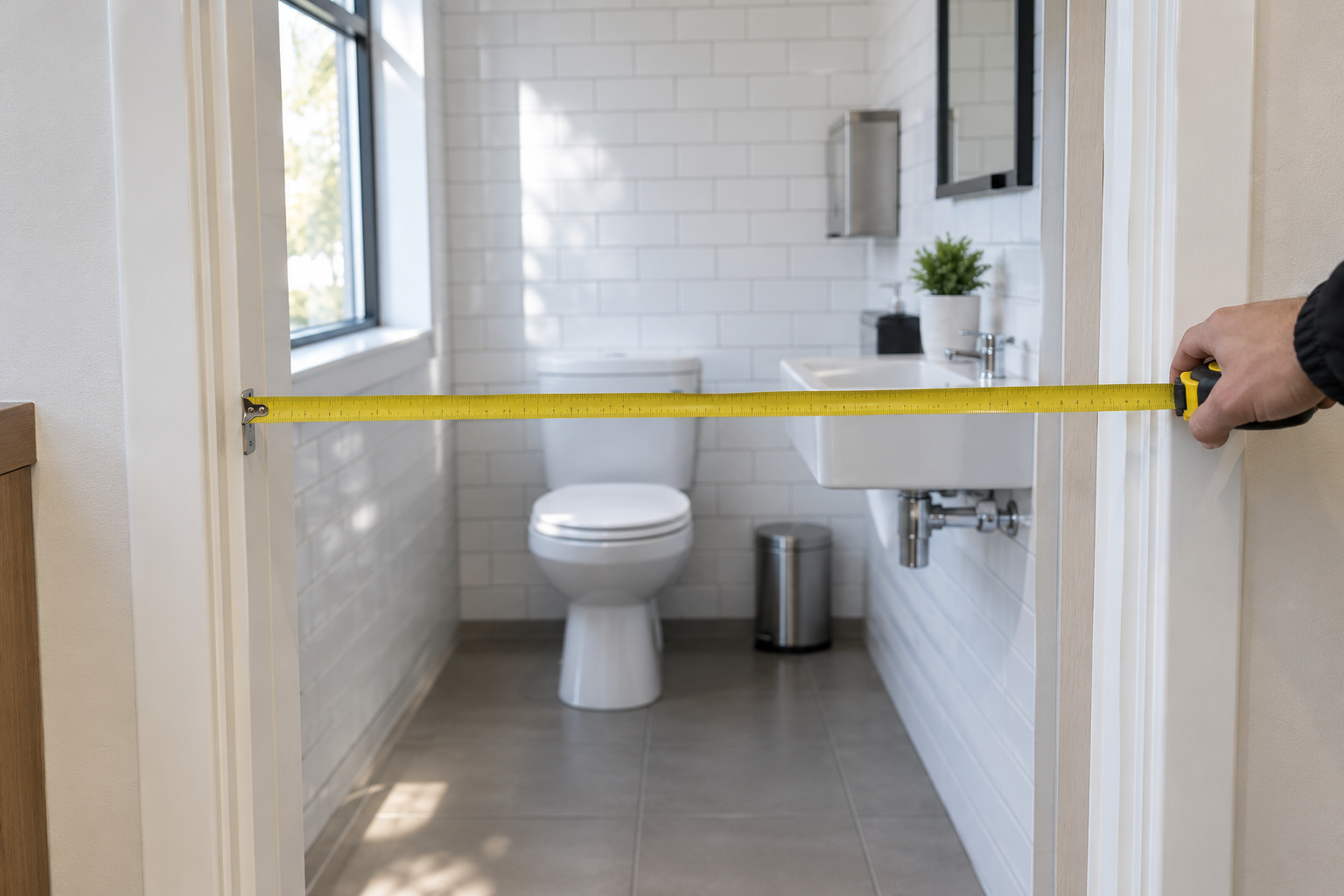
Hand measuring a restroom doorway with a yellow tape measure

The deadline. In federal court you generally have 21 days after you are served to answer or move to dismiss. If the plaintiff mailed you a request to waive formal service and you signed and returned it, you get 60 days from the date the request was sent. If you don’t respond in time, the plaintiff can ask the court for a default.

Your first week:

  1. Write down the service date and keep the envelope and every page you received.
  2. Find your lease and let your landlord or tenant know about the lawsuit, if they are not already named.
  3. Photograph and measure what’s there today: the entrance, counters, tables, the path through the room and the restroom. Do it before anything changes.
  4. Tell your insurance carrier. General liability policies sometimes respond to these claims or help with defense costs, and it costs nothing to ask.
  5. Don’t call the plaintiff’s lawyer yourself. Let your lawyer make the first contact.

What can work in your defense

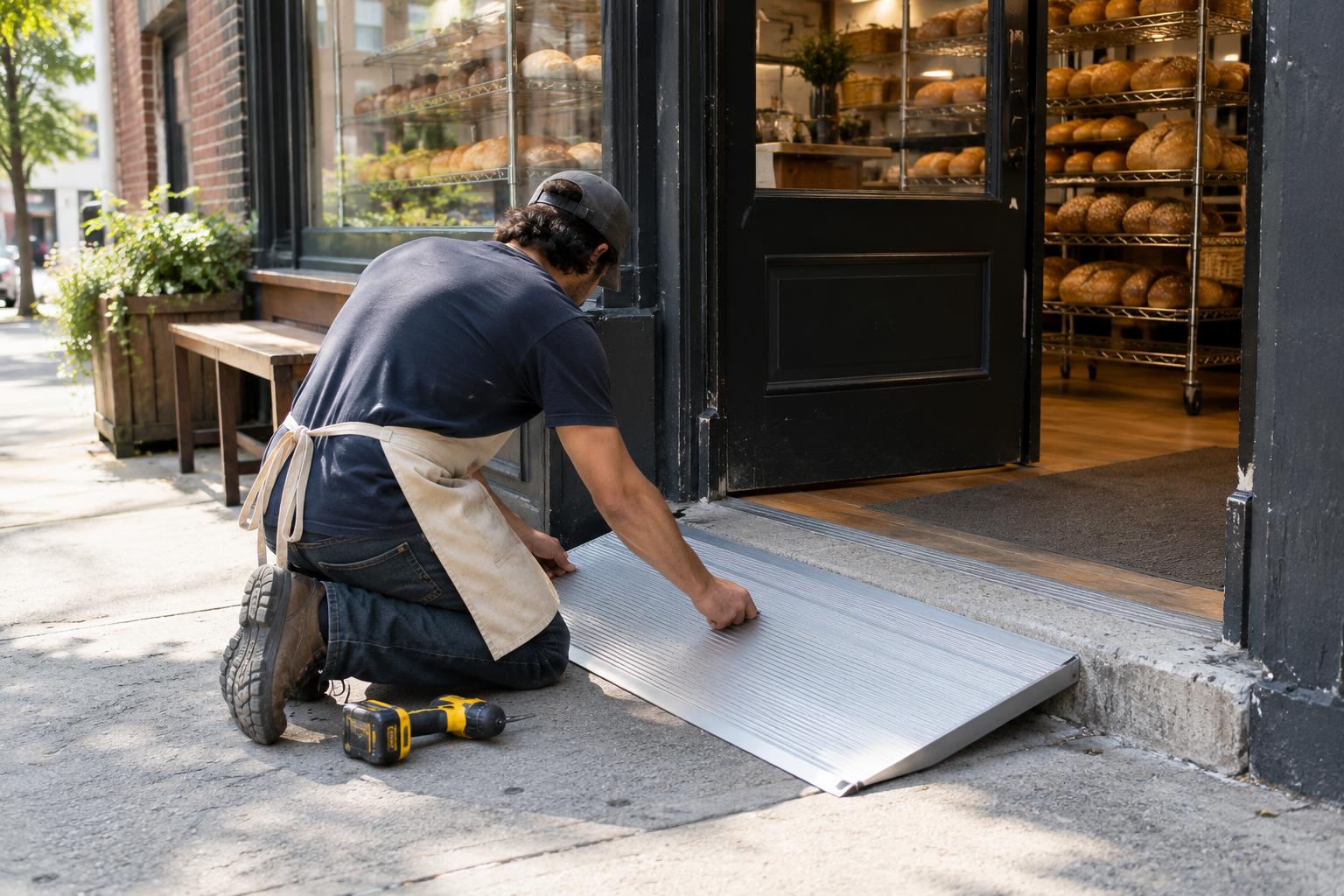
Worker fitting a small ramp at a bakery entrance in Brooklyn

What the law actually requires. For an existing building, the ADA requires removing barriers only where that is “readily achievable,” which the law defines as easily accomplishable and able to be carried out without much difficulty or expense. Cost, the size of the business and its resources all count. Some demands in these complaints may go beyond what the law requires of a small restaurant or shop, and some won’t. A defense starts with sorting one from the other.

Standing. A plaintiff has to show a real injury and a real intention to come back. In 2022 the Second Circuit, the federal appeals court that covers New York, upheld the dismissal of ADA cases whose “intent to return” allegations were boilerplate. Courts look harder when the same plaintiff files case after case. In Martin v. Brooklyn Bagel & Coffee Co., a case we defended in Brooklyn federal court, the court dismissed an ADA class action for lack of standing. Our decisions are on the results page. Prior results do not guarantee a similar outcome.

Landlord and tenant. Who pays for what can depend on the lease, which can matter as much as the defense itself. Sort that out early.

Fixing the barriers, the right way. In a physical access case the federal claim asks only for barriers to be removed, so completing the work and documenting it properly can change the case. Talk to your lawyer before work starts, because timing and records matter. See why the order of fixing and responding matters and what drives the cost of resolving these cases.

How The Samuel Law Firm can help

Michael Samuel has defended about 100 ADA cases since 2019, in the federal courts in Manhattan and Brooklyn and in New York state court. Physical access cases are quoted after we review the complaint and the property. Website cases are handled on a flat fee that covers all work up to trial, including a motion to dismiss.

When a Tucek complaint comes in, we check the service date, the plaintiff’s filing history, the standing allegations and the lease before anyone talks numbers, and if you’re the landlord or the tenant, we look at what the other side owes you under the lease.

For website cases, the site itself can be fixed by Codexyo, an independent web accessibility team we work with. They are not lawyers, and you’re free to use anyone.

Frequently asked questions

These cases are in federal court, so you generally have 21 days after you are served. If you signed and returned a waiver of service, you have 60 days from the date the waiver request was sent. Have a lawyer confirm the exact date right away.

Under the federal ADA regulations, both the landlord who owns the building and the tenant who runs the business are responsible for access. Between the two of you, the lease can decide who is responsible for what, so find it and read the repair, compliance and indemnity sections.

Yes. It is a federal lawsuit with a real deadline, even if the same plaintiff has sued many other businesses. If you don’t respond in time, the plaintiff can ask the court for a default.

Fixing the barriers can change the case, because a physical access claim under the ADA asks only for the barriers to be removed. The work has to be complete and properly documented, so talk to your lawyer before it starts.

The first consultation is free. Physical access cases are quoted after we review the complaint and the property, and website cases are handled on a flat fee that covers all work up to trial, including a motion to dismiss.

Talk it through

Free consultation, flat fee quoted before you commit

I am Michael Samuel. I have practiced law in New York since 1993 and I have handled roughly a hundred ADA accessibility matters, most of them website cases, for the business on the receiving end. If a letter or a lawsuit about your website has arrived, the first call costs nothing and you will get a straight answer about where you stand. I handle website accessibility defense on a flat fee, quoted before you commit, so you know the number up front.

Recent decisions in these cases, with the courts and index numbers, are on my results page. Prior results do not guarantee a similar outcome. If your letter came from a firm we have written about, see what to know about Equal Access Law Group letters and what to know about Apex Trial Law letters.

For a free consultation, call 212-563-9884, email michael@thesamuellawfirm.com, or use the contact form.

Attorney Advertising. This article is general information about New York law and is not legal advice about your situation. Reading it does not create an attorney client relationship.


The Samuel Law Firm

1441 Broadway, Suite 6085

New York, NY 10018

212-563-9884

Contact Us

Sued, owed wages, or injured? Talk to a New York litigator today.

The Samuel Law Firm is a litigation firm in Manhattan. Michael Samuel defends businesses in ADA lawsuits, website and premises, in wage and hour cases, and in contract and commercial disputes, and represents employees owed wages and people injured by negligence. He has practiced in New York since 1993 and appears in the Southern and Eastern Districts of New York and the New York state courts. Call 212-563-9884 for a free consultation; he answers directly